


Structure and philosophy of FP7 will remain despite reduced budget, Potocnik tells MEPs
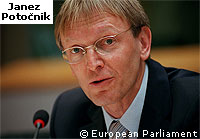
Speaking to MEPs on 26 January, EU Science and Research Commissioner Janez Potocnik outlined those parts of the Seventh Framework Programme (FP7) proposal that must remain under a reduced budget, and urged the Parliament to continue its FP7 debate without waiting for a final FP7 budget decision. Mr Potocnik also questioned some of changes requested by rapporteur Jerzy Buzek in his report on the FP7 proposals. What Mr Potocnik referred to as 'the essential point' of his speech to the ITRE (industry, research and energy) committee was the tight timeframe for the adoption of FP7. Making sure that there are no delays is 'an absolute pre-condition for a successful transition from the existing programme to the new one,' said the Commissioner, urging MEPs to consider Mr Buzek's report in plenary as soon as possible. A final agreement is needed in October if FP7 is to begin on time in 2007, he explained. The Council decision in December on the budget for the EU as a whole between 2007 and 2013 indicated that the FP7 budget is likely to be lower than that proposed by the Commission. Nevertheless, the structure and philosophy outlined in the original proposals will remain, vowed the Commissioner. Referring to the need to rewrite parts of the proposal, Mr Potocnik said that those activities already allocated a comparatively small budget cannot have their budgets cut by as much as those set to receive higher levels of funding. Otherwise these smaller activity areas will lose their raison d'être, he said. Instead, stricter prioritisation within the themes and the highest possible level of flexibility will be needed, he said. Moving on to the changes to the proposal that Polish MEP Jerzy Buzek would like to see, Mr Potocnik expressed his doubts over the rapporteur's alternative view of the implementation of the European Research Council (ERC). Mr Potocnik had proposed establishing the ERC under an executive agency, whereas Mr Buzek favours using Article 171. Article 171 'is of course a possibility,' said Mr Potocnik, 'but I am worried both about political considerations, not related to scientific excellence that might be exerted in the management of the ERC, and practical considerations,' he said. 'Issues like a policy of 'just return' will undermine the essence of the ERC, which is a fair pan-European competition on the basis of scientific excellence,' he explained. Also, if the ERC is to be up and running in 2007, then an executive agency is the only realistic option, he continued. Mr Potocnik did signal his willingness to consider the Article 171 alternative, but warned that this will mean the ERC becoming operational later than planned. He proposed a compromise solution under which an executive agency would be initially established, and transition to the use of Article 171 would be possible if recommended by an interim review of FP7 in 2010. Mr Potocnik also questioned the logic of 'cost effectiveness', highlighted as a priority in the Buzek report. The Commissioner said that he has 'serious doubts' over how this could be implemented, and stressed that the priority is not lowest costs, but most effective use of Community funds in terms of outcomes. 'Excellence is the criterion that applies to FP7 and on which its success depends,' he said. The Commissioner clarified the absence of the term 'young researchers' - a term used frequently by the rapporteur - in his proposals, saying that this concept, particularly when coupled with an age limit, raises legal problems on grounds of age discrimination. He gave his reassurance that younger researchers would not be ignored in FP7, and explained that length of research experience had proved a more appropriate criterion in FP6. Finally, Mr Potocnik addressed concerns relating to the links between FP7 and the Competitiveness and Innovation Programme (CIP). While FP7 will focus on research projects involving research organisations and enterprises directly, CIP will focus on supporting projects to promote the take up of existing technologies, he said. The objective is thus complementarity. Following December's budget decision by the Council, work is now going on to apportion the funds available. Once Mr Potocnik knows what proportion of this will be available for FP7, a new proposal will be submitted. Amendments to and adoption of Mr Buzek's report will be delayed until the Commission's updated proposal has been submitted. In spite of these delays, the Commissioner finished by once again urging MEPs to press ahead with their debate on FP7, and asking them to speed up their calendar for the adoption of their report.