


Plant-based product helps piglets cope with adult diet
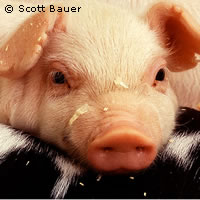
A Swedish-Polish partnership with funding from EUREKA has developed a plant-based product that helps a piglet's digestive tract to mature, thus improving the survival rate of piglets. Pigs frequently suffer from digestive disorders around the time of weaning, primarily because they are taken away from their mothers and put onto an adult diet before their digestive tract has fully developed. Around 10% of piglets are lost to bacterial infections including weaning diarrhoea. In the past antibiotics were used to minimise the risk of infection, but as these feed additives were shown to contribute to microbial resistance, their use was stopped. The HEALTHY WEANING project's solution involves lectin, obtained from the red kidney bean plant. Lectins are proteins that bind cells together; typically red blood cells. The product has been named Suilektin 'Although giving any lectin in large amounts would not be recommended, we will be explaining to farmers the advantages of its use in small, carefully calculated amounts for this very short period,' says project leader Stefan Pierzynowski of Lund University in Sweden. 'This very specific use - as an additive and not as a food - will stimulate maturing of the digestive tract without causing any digestive problems,' Professor Pierzynowski adds. The project found that giving lectin to piglets of 11 to 12 days old significantly increased successful weaning at 28 days. This is done by accelerating the production of mature intestinal cells, which are able to cope with the weaning diet. The study identified the optimal timing and dose, the best consistency and the method of administration. The partners also examined the animals' performance and the economic impact of the technique. 'The main idea was to achieve a weaning before weaning. If we apply our product during a specific window of development before weaning, we wean better,' says Prof Pierzynowski. A consortium is currently working to set up arrangements for the production of Suilektin.
Countries
Poland, Sweden