


Commissioners make the case for embracing biofuels
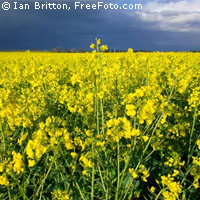
Giving an indication of the importance awarded to biofuels by the European Commission, the President of the European Commission, José Manuel Barroso, along with two Commissioners, addressed participants at a conference in Brussels on 5 July. Mr Barroso acknowledged that producing biofuels can lead to other environmental problems, but said confidently that such a situation can be avoided, and said that further research will improve production. Peter Mandelson, EU Trade Commissioner, said that consumers will only pay for biofuels if they are confident that production is not damaging the environment elsewhere. And EU Energy Commissioner Andris Piebalgs spoke of the EU's progress towards biofuels targets. Mr Barroso summarised the Commission's interest in biofuels: energy security and climate change. Global energy demand is expected to increase by 60% by 2030 if current trends continue, according to the International Energy Agency. At the same time, the climate is changing, and many scientists believe that there is a link between emissions and climate change. Energy emissions represent three-quarters of greenhouse gas emissions. 'Properly managed, biofuels have the potential to offer important benefits: they can reinforce the EU's security of supply through diversification of energy sources, and they are one of the few practical ways - alongside more efficient vehicles and hybrids - to significantly reduce greenhouse gas emission in transport,' said Mr Barroso. But scientists and environmental campaigners have been pointing out, in increasing numbers, that that the production of biofuels can lead to new problems, such as soil degradation, water shortages, changes to biodiversity and deforestation. In addition, some biofuel production methods are not carbon neutral. 'What we must not do is pursue a policy which simply shifts environmental problems from one sector to another, or from one continent to another. Reading recent press coverage, one could be forgiven for thinking that biofuels cause more problems than they solve. My hope is that this conference will debate all the pros and cons, without fear of favouritism, while sticking to concrete facts and avoiding populist myths,' said the Commission President. Mr Barroso is however confident that 'it is possible to manage biofuel development in ways that reap the potential benefits, without engendering new problems'. Further research will help to improve production methods, and the Commission is therefore prioritising studies on second generation biofuels, industrial biotechnology and biorefineries. Mr Barroso pledged that the European Commission will lead international efforts to ensure the sustainable production and consumption of biofuels. 'This means setting up a rigorous sustainability mechanism to underpin a new market for these products,' he said. Many of Mr Barroso's energy concerns were echoed by Peter Mandelson. He warned that consumers will not tolerate the production of biofuels if the process is doing harm elsewhere: 'Europeans won't pay a premium for biofuels if the ethanol in their car is produced unsustainably by systematically burning fields after harvests. Or if it comes at the expense of rainforests.' Mr Mandelson also emphasised the benefits of biofuels for developing countries, which are frequently in a better position than European countries to grow the right crops. Many developing countries have spare agricultural capacity and a climate and land profile that suites energy-rich biofuels. The European Commission is hoping that the EU will be able to increase biofuels' share of the EU fuel market to 5.75% by 2010. In 2006 the figure was 1.5%. 'It does not look as if the full 2010 target will be achieved,' said Andris Piebalgs. But a 10% target, set for 2020, is binding. The EU Member States will therefore need to find incentives to encourage take-up. 'Biofuels are not the panacea for all our energy problems. But they are an essential component of our future approach to energy policy, and a way to make sure that the transport sector plays its full part in our efforts to tackle global warming and to diversify fuel sources,' Mr Piebalgs concluded.