


The common European train of the future makes headway
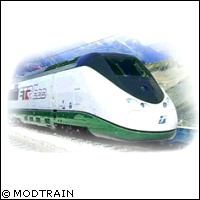
Researchers in an EU-funded project have been busy developing a common European train of the future able to travel on all the continent's railways. With Europe's railways a patchwork of different countries' trains, regulations and signalling systems, the aim of the MODTRAIN project is to develop a standardised, cross-border train which will hold no secrets for European drivers and passengers. 'Today, a French driver doesn't know how to drive a German train, and a German driver can't drive an Italian train,' explains Eric Fontanel, the Chairman of the Innovative Modular Vehicle Concepts for an Integrated European Railway System (MODTRAIN) project. 'So, we had to find a solution.' According to Fontanel, the trains are a symbol of continued European integration. 'As trains now cross more and more borders, all drivers, for example, need to find themselves in the same environment. But it's also very useful to have more interchangeable operation systems - like air-conditioning, door control, public address and communication systems,' he says. Following four years of research, the thirty seven partners in the project have built a mock up of the high-speed intercity train, which could prove to be a sustainable and environmentally-friendly alternative to low cost, short haul air flights. Starting from scratch, the team defined the functional, electrical and mechanical interfaces of the interchangeable locomotives and carriages of the future. They then redesigned traction systems, brakes and controls as well as the interior design so as to make the new train familiar to all Europeans passengers and drivers. When the project ends with all the harmonised specifications in place by the end of January 2008, it will be up to the train manufacturers to simply put them into practice. Then they will have to include the new standards into their bid tendering, so that tomorrow's European trains can travel from Lisbon to Warsaw and Oslo to Palermo in one high-speed swoop, as dreamt up by Louis Gallois and Hartmut Mehdorn the Directors of the SNCF (French railways) and the DB (German railways) respectively. The MODTRAIN project received €60.9 million in funding from the 'Sustainable development, global change and ecosystems' thematic area of the Sixth Framework Programme (FP6).