Judy punches through the puppetry glass ceiling

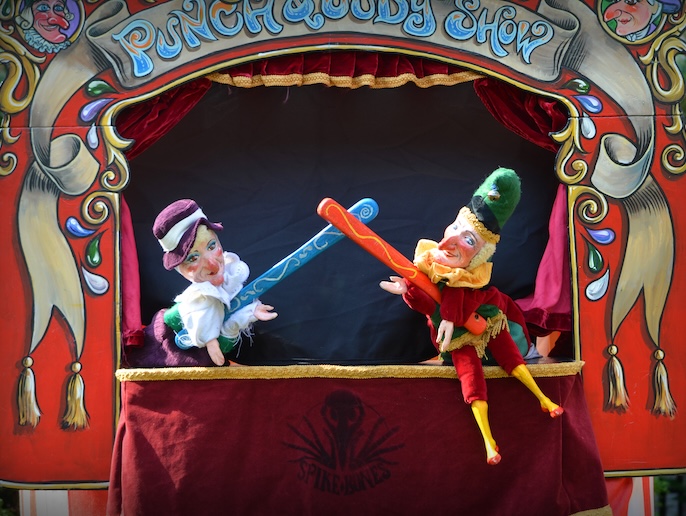
Perhaps there is no more iconic performance in English puppetry than the Punch and Judy show. While the two characters have been entertaining audiences since 1662, the story is typically told through a masculine perspective – in terms of not only Mr Punch’s antics, but also the male puppeteers. “There is a long-standing myth that Punch and Judy – along with many puppetry forms – is only a male-authored and male-driven tradition,” says Alissa Mello, current Editor of ‘Puppetry International’(opens in new window) and past Marie Skłodowska-Curie postdoctoral research fellow of Drama at the University of Exeter(opens in new window), working under the supervision of Katherine Newey, a professor at the University. With the support of the EU-funded JPEWP(opens in new window) project, Mello is leading an effort to challenge this myth. “JPEWP, or the Judy Project, set out to rewrite the story of Punch and Judy and to establish a more inclusive ‘her-storiography’ that places women at the centre – both as creative practitioners and as the character of Judy,” she adds.
Puppets and gender stereotypes
The project, which received support from the Marie Skłodowska-Curie Actions(opens in new window) programme, aimed to uncover the deep and often unacknowledged contributions women have made to the cultural heritage of Punch and Judy shows. It also looked at how female puppets such as Judy have been used to reinforce and subvert gender stereotypes. To achieve these twin goals, the project conducted extensive research across multiple archival collections in the United Kingdom, United State and Europe. Furthermore, it interviewed numerous artists and leading contemporary puppeteers. “This work brings women practitioners and the character of Judy into full view as central agents in the tradition rather than marginal figures,” explains Mello.
A new way to do Punch and Judy
The project’s research led to the premiere of two new Punch and Judy shows(opens in new window). The two shows, one for families and another intended for adults, were developed by Nephew Spike Bones, a second-generation showman and nonsense merchant whose skillset includes puppetry, clowning, music and general tomfoolery. His show is an alternative take on the traditional slapstick fun of Punch and Judy where both Mr Punch and Ms Judy take centre stage. “These shows are sending ripples through the Punch and Judy community, prompting practitioners, festival programmers and audiences to re-examine long-held assumptions about gender, authority and ‘tradition’ within the art form,” notes Mello.
A more inclusive account of an important cultural heritage
According to Mello, the Judy Project has delivered a more inclusive account of an important form of cultural heritage. “The project has transformed Punch and Judy from a seemingly ‘fixed’ male-centred practice into a living space where women’s histories, experiences and creative agency are more visible and actively shaping the future of the tradition,” she concludes. “This shift is particularly important as it comes at a time when questions about representation, power and violence against women are at the forefront of public debate.” Following the project, Mello is working with major archives to ensure that female Punch and Judy practitioners are better represented in collections and to support future research on contemporary women puppetry practitioners.