Turning theory into action across five river basins


Rivers are critical resources, sustaining agriculture, industry and the communities and ecosystems that depend on them. Decisions taken by one sector often affect another, yet management of this water often falls across separate domains with sometimes conflicting objectives. “For example, if the price of energy decreases, pumping of irrigated water and application of fertilisers increases,” explains José González Piqueras, a professor at the University of Castilla-La Mancha(opens in new window) in Spain. “If we use a lot of water, or we expand land use, this has an impact on the environment.” As coordinator of the REXUS(opens in new window) project, González set out to demonstrate how the sustainable management of interconnected resource domains – water, energy, food production and ecosystems (WEFE) – could be integrated, using real territorial systems such as river basins. The project sought to overcome the traditional siloed management of these sectors. It adopted system dynamics modelling (SDM), a conceptual tool that can capture the cascading effects of a flood or drought across different nexus domains. A central objective of REXUS was to bring stakeholders into this modelling process, to provide insight and feedback. “As scientists we can deliver a report and say ‘that's the risk of having a flood’. But if stakeholders are not involved, nobody will do anything,” says González.
On the ground research
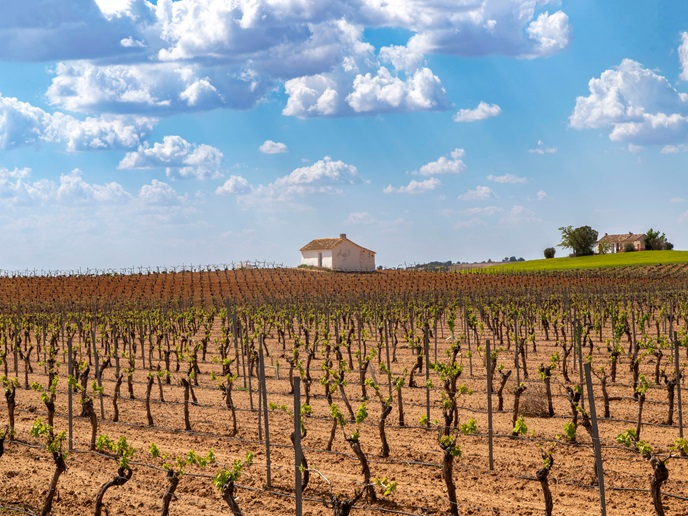
REXUS established Learning and Action Alliances (LAAs) at five pilot sites in Spain, Italy/Slovenia, Romania, Greece and Colombia. Each was selected for its contrasting resource challenges and stakeholder landscapes. Spain’s Júcar River basin represented a technologically advanced agricultural region facing severe climate driven droughts. Strong relationships with stakeholders made it an ideal testbed for implementing remote sensing tools and participatory modelling. The Isonzo/Soča River on the Italy/Slovenia border provided a transboundary basin where water supports agriculture, hydropower and tourism. Romania’s Danube basin reflected a rapidly changing agricultural region with increasing irrigation needs as well as frequent floods, while Greece’s Pinios River mirrored the Spanish pilot, with strong technological capacity and competing demands from agriculture, tourism and environmental protection. Finally, Colombia’s Amaime River provided an opportunity to test the REXUS approach in a very different setting, with a highly diverse socio political context involving small farmers, indigenous communities and a major paper industry. Across all pilots, the project implemented remote sensing technologies, stakeholder workshops and SDM to map resource interactions and test future scenarios.
More informed stakeholders, better decisions
The project delivered several clear achievements. In Colombia, REXUS facilitated agreements on the timing of water delivery between upstream and downstream users. In Palma de Gandia, Spain, the project brokered an agreement(opens in new window) between the river basin authority, the municipality and local farmers to reduce agricultural pollutants that had severely contaminated the town’s groundwater. The LAAs continue to function as local stakeholder platforms in all pilot regions, and remote sensing tools for real time monitoring of water use are now integrated into river basin management plans in Spain, where irrigation maps are helping to reduce conflict between stakeholders. Perhaps most importantly, REXUS shifted mindsets. “Stakeholders now know the sensitivity of other sectors when they make important decisions,” notes González. “I think the main actors may consider the impact they have in these other domains.”