



A regenerative stent that transforms into an artery

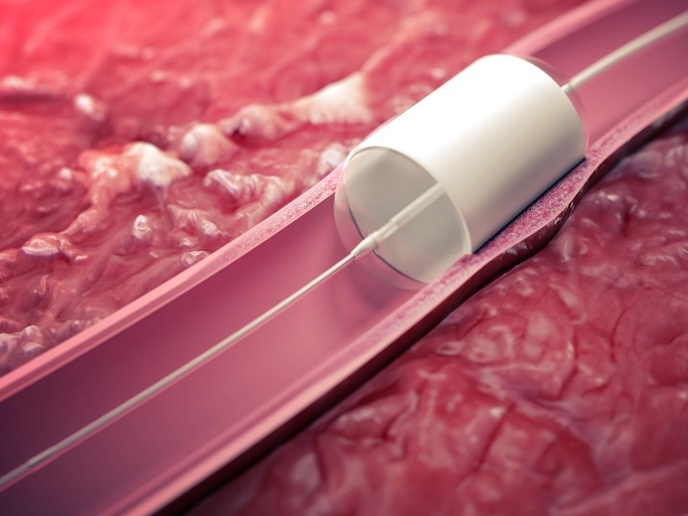
Below-the-knee critical limb ischaemia (BTK-CLI) is a severe form of peripheral artery disease, characterised by narrow arteries and reduced blood flow to the foot. This condition causes chronic pain and ulcers, can lead to amputation and has a significant negative impact on quality of life. It affects over 3.5 million people in the EU and United States. Current treatments include balloon angioplasty, a procedure that involves inflating a small balloon inside the arteries to restore blood flow. Yet clinical outcomes are not always promising: roughly 40 % of patients suffer from complications and around a quarter still require either minor or major amputations. Any therapeutic impact may be only short-lived. “What is needed is a temporary support structure that helps keep the artery open for a longer period after ballooning,” says Bart Sanders, CEO and founder of STENTiT(opens in new window) in the Netherlands. “Our device is designed to provide exactly that.” Through the EX-STENT project, which was funded by the European Innovation Council(opens in new window) (EIC), Sanders and his team further developed and validated an innovative regenerative stent to treat BTK-CLI. The stent – known as the Resorbable Fibrillated Scaffold(opens in new window) (RFS) – first assists with opening the arteries by providing a temporary structure to restore blood flow. Over time, it then gradually forms new vascular tissue as the implant dissolves, essentially transforming into a new artery. “A unique feature of our stent is that it is made from fibres, creating a porous structure,” explains Sanders. “This structure facilitates the homing of blood cells and stimulates a natural healing response.” After the body is guided to rebuild a new artery within the existing one, the implant safely resorbs. “The goal is to achieve longer-term patency, enabling wound healing in the foot and ultimately helping to prevent amputation,” notes Sanders.
Standardising the production process
The main goal of the EX-STENT project was to standardise the production process and complete the validation and verification of the devices. This gave the green light for the researchers to also conduct a successful first-in-human clinical trial to demonstrate the initial safety and functionality of the technology in patients. Another key objective was obtaining ISO 13485 certification for their quality management system, which is essential for developing and manufacturing medical devices.
Progression towards the next phase of development
“What we are most proud of is reaching the point where we could bring our innovation into patients,” remarks Sanders. “Advancing our novel fibre-based stent technology to produce consistent, clinical-grade batches and completing all validation testing were essential steps – but ultimately a means to make this clinical milestone possible.” This progress was underpinned by a fully traceable quality management system. “Being able to successfully conduct our first-in-human clinical study, in collaboration with a leading hospital and key opinion leader Professor Marianne Brodmann at the University Hospital Graz in Austria, marks a defining achievement for our team,” says Sanders.
Bringing the stent to European healthcare systems
The team now aims to conduct a larger clinical study, with funding support from the EIC Accelerator(opens in new window). “Provided the results are positive, this study would support regulatory approval and allow the device to be introduced into the European market,” notes Sanders. “At the same time, we are exploring the potential of our technology for other clinical indications where our Resorbable Fibrillated Scaffold could significantly improve patient outcomes,” he adds.