Innovative powertrains for more sustainable aviation


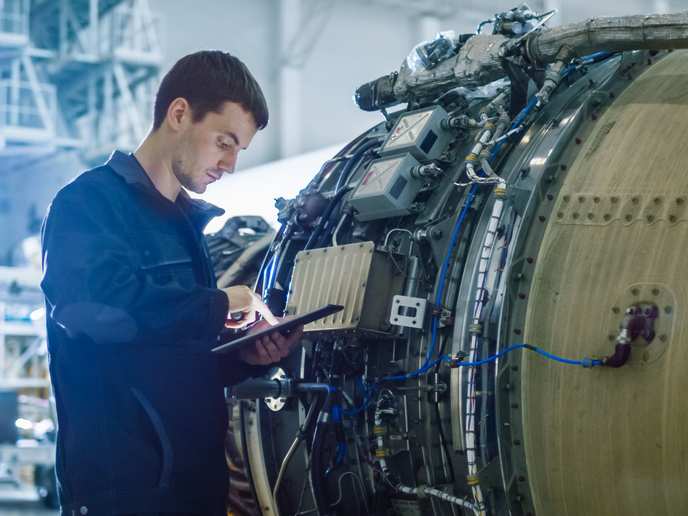
Aviation tech company Collins Aerospace has begun initial testing of a hybrid-electric powertrain subsystem that will help improve energy efficiency and reduce climate impact in the aviation sector. This initiative is part of the EU-funded SWITCH(opens in new window) project that is developing a revolutionary sustainable gas turbine propulsion system to help achieve climate-neutral air transport for short- and medium-range aircraft. The tests are an important step towards demonstrating the hybrid-electric technology on a full-scale engine developed by Pratt & Whitney, another SWITCH project partner. The subsystem – which includes two megawatt-class electric motor generators, controllers and power distribution systems – is currently being tested at The Grid, an advanced electric power systems lab in Rockford, Illinois, in the United States. “The start of powertrain subsystem testing is a key step towards demonstrating the potential of applying more electric systems to future commercial aircraft,” comments Kristin Smith, Vice President of Electric Power Systems at Collins Aerospace, in a recent news item(opens in new window). “Hybrid-electric technology has the potential to transform aviation by enabling greater fuel efficiency across multiple future platforms, including next generation single-aisle aircraft.”
Innovation across Europe
As reported in the news item, the SWITCH powertrain includes several key components developed at top research and development facilities across Europe. The megawatt-class electric motor and controllers were designed and built at Collins Aerospace’s facility in Solihull, United Kingdom. The system’s power distribution components, including a solid-state power controller and power distribution panel, were designed at the company’s facility in Nördlingen, Germany. Lastly, the high-voltage electrical wiring interconnection system developed by SWITCH project partner GKN Aerospace was built in Papendrecht, the Netherlands. SWITCH is aligned with the strategic goals of the EU’s Clean Aviation Joint Undertaking, which is fostering innovation in European aviation with the goal of propelling it into a sustainable and climate-neutral future. The project is therefore working to improve fuel burn and energy consumption by 20 % and reduce CO2 emissions by 50 % through improved efficiency. It also aims to cut nitrogen oxides by 50 % through water injection in the combustor and reduce contrails through particle removal and water recovery. Through these actions, the project will significantly reduce three major climate warming culprits in aviation: CO2, nitrogen oxides and contrails. As part of the next phase of testing, the SWITCH subsystems validated during the current phase will be integrated into a hybrid-electric engine demonstrator. SWITCH (Sustainable Water-Injecting Turbofan Comprising Hybrid-electrics) ends in December 2026. For more information, please see: SWITCH project web page(opens in new window)