Transforming farming through collective action in women-led innovations

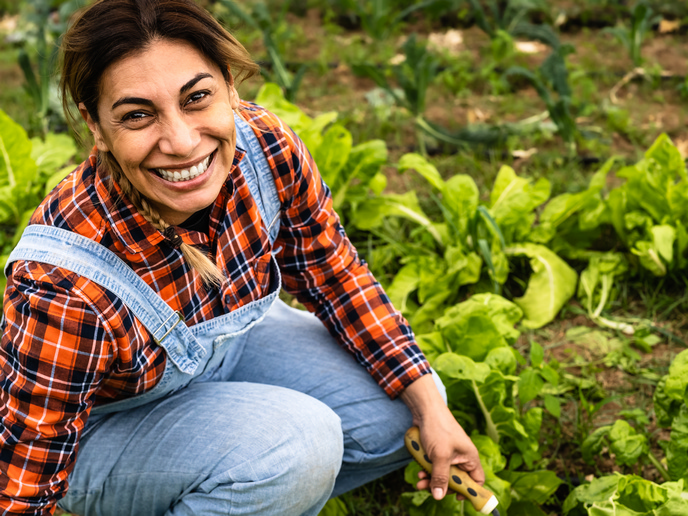
Agriculture discriminates against women in a variety of ways. Barriers are social, cultural, economic and political. With the aim of fostering a transition towards the sustainable and inclusive development of rural communities, the EU-funded SWIFT(opens in new window) project worked with women-led innovations (WLIs). The effort focused on promoting structural and narrative changes that empower women, LGTBQI+ and migrant workers in agriculture as well as on studying the role of agroecology in advancing gender equality.
Women-led innovations
The project’s approach prioritises participation and co-creation of knowledge. With 21 WLIs in 12 European countries as well as inspiring initiatives in Brazil and the USA, SWIFT addresses rural gender inequality in multiple ways. As project coordinator Marta Rivera-Ferre says, “WLIs are defined as grassroots innovations in agri-food systems in which women and gender-diverse persons take a central leadership role and which are built to challenge structural inequalities in agriculture and rural areas.” Participants in the WLIs were typically women and LGBTQ+ persons already engaged in community groups and alternative food networks. The WLIs were organised in eight clusters. Five were focused on confronting structural inequalities in agriculture, where barriers include limited access to resources and training as well as under-representation in agricultural organisations. The remaining three WLIs address the under-researched topics of LGBTQ+ farmers, migrant women agricultural workers and women farmers in central and eastern Europe. The project portal(opens in new window) hosts many of the outcomes produced by SWIFT. True to its inclusive approach, these materials showcase individual stories and amplify the voices of the project participants. In addition to podcasts, videos, policy briefs and a searchable map of WLIs, visitors can explore Soil Sisters(opens in new window), a comic book designed to educate the public about the challenges facing women farmers.
A focus on agroecology
A holistic approach to food and farming, agroecology(opens in new window) integrates social, economic and cultural dynamics into agriculture. Critically, this approach views food not as a commodity, but as a human right. Compared to industrial food producers, farms that practice agroecology tend to be small-scale, focused on community and rich in biodiversity. They also have a much higher rate of women in leadership. An important outcome of the project is an analysis of the European Commission’s common agricultural policy (CAP)(opens in new window). The CAP frames food as a commodity, where productivity is measured by the kilograms of one product per hectare (monoculture), and large industrialised farms are deemed more efficient than farms practicing agroecology. Rivera-Ferre shares an alternative approach: “SWIFT’s vision starts from agroecology and the human right to adequate food by positioning food as a common good and as a human right. Under this framing, alternative indicators to measure efficiency include biodiversity or number of people fed per hectare, for which small-scale, diversified farms oriented towards local markets are more efficient.” The CAP will be revised in 2028, and the project advocates for policymakers to reconsider the commercial orientation of the document. The current prioritisation of food as a commodity perpetuates gender inequality and has a negative impact on the environment. “Agroecological initiatives have the potential to open spaces for women’s leadership and collective organisation that conventional farming structures rarely provide,” Rivera-Ferre explains. Through the project’s WLIs, SWIFT has made visible the contributions and leadership of excluded actors, including women and LGTBQ+ farmers as well as migrant farm workers. It is time for EU policy frameworks to reflect that reality.