Where do people die? We now have an international classification for it

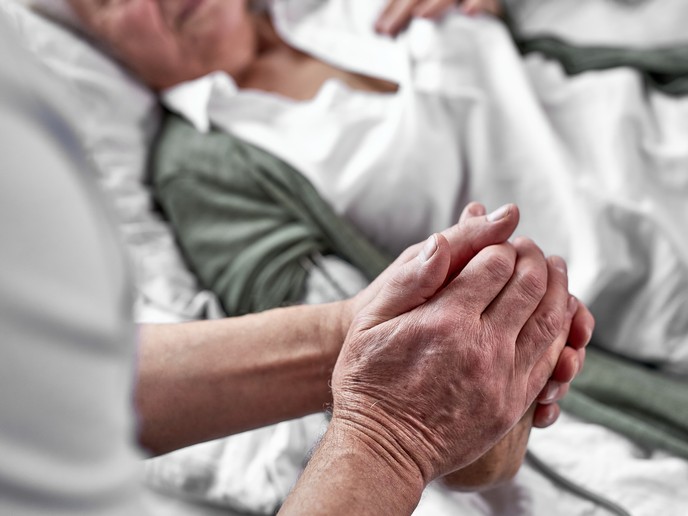
Countries worldwide have just gained the first-ever international classification designed to describe the places where people are cared for at the end of life and where they die. The United Nations Statistical Commission recently adopted(opens in new window) the International Classification of Dying Places (ICP)(opens in new window) developed under EOLinPLACE(opens in new window), an EU-funded project focusing on improving the quality and international comparability of information about places of care and of death.
A common language
The way place of death is currently recorded around the world differs from country to country. National categories and definitions vary considerably, with places such as ‘home’, ‘hospital’, ‘hospice’, ‘nursing home’ or ‘other’ defined differently across health and social care systems. The ICP resolves the issue by introducing a standardised, hierarchical framework that can be adapted to the needs of each country’s data system. The classification can be used by doctors to record place of death on death certificates. It can also be applied in electronic death registration systems, clinical records, surveys and research. “Establishing the international standard for dying places fills a significant gap in international official statistics and data,” states Andrew Hancock, Chair of the United Nations Committee of Experts on International Statistical Classifications, in a recent ‘EurekAlert!’ news release(opens in new window). “It supports the Sustainable Development Goals (SDGs), will inform policy and decision-making to better understand and support differing and distinct population groups, and enables more consistent and comparable mortality statistics.” The ICP broadly “distinguishes five major types of dying places: dwelling or domicile; health or care facility; other facility; vehicle; and outdoor. These are further divided into detailed categories and subcategories.” Distinctions are made between: a person’s own residence and other dwelling types such as refugee camps, retirement homes and correctional facilities; between hospitals, nursing homes and hospices; between other facilities such as hotels and churches; between ambulances and other vehicles; and between outdoor locations such as forests and public roads. The ICP also provides categories for when the place of death does not fit any of the above descriptions (‘elsewhere’) and for when it is unknown.
Not just death
A major innovation of the ICP is that it goes beyond simply recording where death occurred. It can be applied at multiple points along a person’s end-of-life pathway – where they receive care, where it is preferred, where they wish to die and where death ultimately takes place. This opens the door to examining not only where people die but also how they move between settings in their final days and whether the reality of their care aligns with their wishes. Following the United Nations’ adoption of its classification, EOLinPLACE is now focusing on implementation. Wider use of the ICP would provide a common international metric, consequently improving long-term data on dying places. This could ultimately inform “planning for palliative care, hospital and community services, long-term care and social support.” “Where people are cared for and where they die are fundamental indicators of how societies care for people towards the end of life,” states project lead Barbara Gomes of EOLinPLACE (Choice of where we die: a classification reform to discern diversity in individual end of life pathways) coordinator University of Coimbra, Portugal. “For the first time, we now have an international framework through which countries can describe these places using a common language.” For more information, please see: EOLinPLACE project web page(opens in new window)