Insecticide-free pest management of olive trees

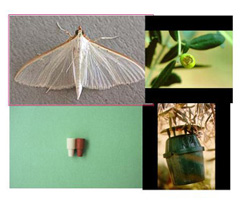
The major insect species threatening olive trees in the Mediterranean region are the olive and the jasmine moth (order Lepidoptera). These are mainly controlled by frequent insecticide applications that may involve toxic chemicals with potentially harmful effects to the environment, and are quite often insect-resistant. Urged by this, the TRIPHELIO project investigated environmentally-friendly, toxicologically safe and more selective pesticides, studying natural compounds, such as pheromones. The aim was to develop an insecticide-free pest management system that is economically feasible and sustainable and combines various techniques. More specifically, researchers studied and improved formulation of sexual pheromone components to be used in the mating disruption technique. Mating disruption, as practiced in olive integrated pest management programs, involves flooding an olive grove with large amounts of the sex pheromone to prevent potential mates from locating one another and mating. The Montmorillonite common natural clay was proven as an effective substrate for the slow release formulation and UV protection of the sex pheromone components of the jasmine moth. Although the mating disruption against the jasmine moth population was found to be efficient concerning male disorientation around 90%, it is only suitable for isolated, densely planted olive plantations. Further collaboration is sought with public institutes or private companies, for further development of this technology in olive growing countries or other cultivations that suffer damage from P. unionalis. Additionally, further cost reductions in the pheromone synthesis, formulation and field application are also pursued.