Stepping up to the mark


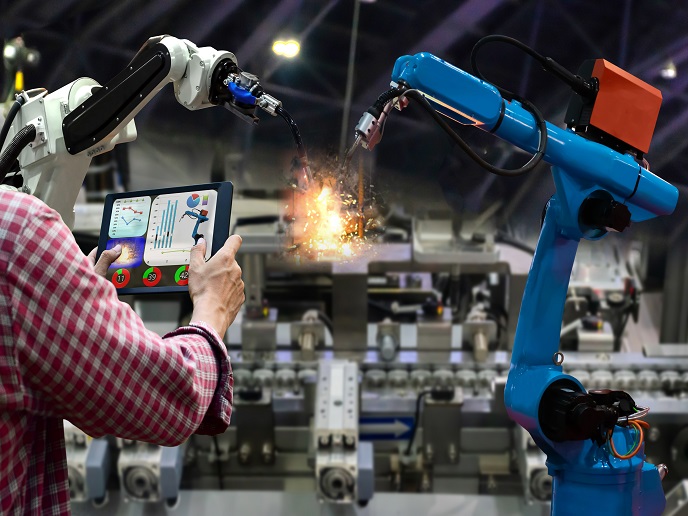
Sole bond failure is the single biggest problem in modern shoemaking and accounts for the vast majority of customer returns. Particularly the roughing process plays a key role since it is one of the final steps in shoe manufacturing. However, it is a very difficult process to carry out manually and it releases leather dust into the working environment. The IRIST project, Improved Roughing with Integrated Sensor Technology, addressed the need for the introduction of new technology in the field in order to realise a new process for surface treatment of leather and synthetic materials, improving quality and removing health and safety risk. The project resulted in an automated process, which can be conducted in an enclosure totally sealed from the workplace environment, thus eliminating dust pollution. To achieve this, IRIST deployed an alternative surface preparation technique, in which the upper material is removed by grit-blasting under closed loop control. With the use of vision and other optical sensor systems it was possible to monitor and acquire the topology of the lasted upper and sole. The feedback from the sensors allows the control of the process giving answers concerning the correct place and amount of the material to be removed. Additionally a handling system was developed for the delivery of work-pieces to the process, providing adequate support during both scanning operations and processing. The handling unit is mounted onto a servo-controlled two axis integrated rotary table and slide-way. A pneumatically operated clamping unit has been designed and constructed, which is capable of accommodating a wide variety of shoe sizes and types. The localisation of the work-piece and integrated handling system is robust, and maintains its position accurately ensuring correct registration between the scanning operation and subsequent processing sequence. The integration of the clamping and handling system includes a linear conveyor for transportation between the inspection station and the processing station.