



Learning history with a new approach

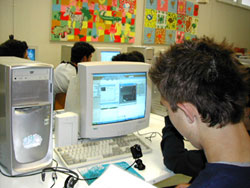
Information and Communication Technology (ICT) in the learning process is an effective vehicle for methodological modifications and improvements in the overall performance of the education system. Further advancements in this arena have led to e-learning. Now the European research project Lab@Future is taking this notion to a new realm. Through this experiment, a universal platform synergising mobile and wireless information interaction while addressing issues of the constructivist theory of learning was devised. Also taken into consideration was the use of dialogue with the activity theory, especially the theory of expansive learning. The main thread binding the constructivist theory of learning is the notion of knowledge being an active process that is built up by the learner. Essentially this means that is more than just a process of simply transferring knowledge from one person to the other. Thus learners build their own knowledge through testing ideas and approaches from their previous knowledge and experience and applying it to new situations. Relevant, engaging learning activities, consisting of problem-solving and critical thinking support this process. Stemming from this, the history experiment has set forth to enhance traditional approaches and contexts of teaching and learning history. The experiment is carried out by connecting formal and informal settings using ICT-energising mobile eLearning techniques for implementing educational walks, visits and seminars. In order for the experiment to be conducted at a remote site such as a museum, students will need to use various kind of equipment. Some of these may include laptop PCs and PDAs connected to Internet and digital cameras to take photos/videos of the exhibits. In the classroom and at an observing school, they will require workstations with Internet connection. An active collaboration exists with one private high school in Greece in addition to contacts and liaisons with a large number of interested public observing schools. This dissemination network could be further exploited for the purpose of distributing added value applications and services.