Dissecting the process of HIV infection

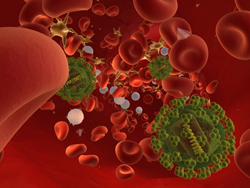
Since the first reported HIV infection cases back in the 1980s, an explosion of research data has generated invaluable information on virus biology and infection. Compared to other RNA viruses (retroviruses), HIV has the unique ability to remain dormant for years without causing disease, and contains extra accessory proteins that seem to support infectivity. Nef is one such viral protein which interacts with host cell signal transduction proteins to provide survival of infected T lymphocytes. Although initially named as negative factor, evidence suggests that Nef boosts the intrinsic HIV infectivity by cooperating with the cellular GTPase dynamin 2. To shed more light into the role of Nef in the HIV infection process, the EU-funded project ‘The importance of Nef effects on HIV-1 infectivity for viral pathogenesis’ (NEF-Pathogenesis) worked on primary HIV-1 isolates from the most predominant and transmissible virus subgroup C. The project’s findings revealed that Nef rendered HIV-1 virus 10–50 times more resistant to the neutralising effect of two human antibodies, namely 2F5 and 4E10. More specifically, experiments showed that Nef worked by decreasing the recognition of the virus particles by these antibodies, which bound to a domain of the envelope glycoprotein adjacent to the retroviral membrane (MPER). The envelope glycoproteins from diverse HIV-1 isolates showed similar sensitivity to the activity of Nef. Apart from providing new knowledge on the molecular mechanisms underlying HIV infection and disease progression, NEF-Pathogenesis project results could serve as a target for therapy and future vaccine design.