


German-Russian robot arm to strengthen bilateral collaboration, says minister
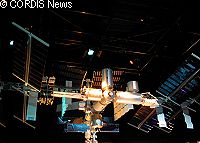
A German-Russian space project that will see a robot arm operating on the International Space Station (ISS) is an example of Germany's 'forward-looking' relationship with Russia in terms of space, German Minister for Education and Research, Edelgard Bulmahn, has claimed. The robot arm, known as Rokviss, will be carried by a Russian Progress Transporter, due to be launched late on 23 December from the Baikonur launch centre in Kazakhstan. By the end of January 2005 it should be installed on an outer platform of the ISS. The device is around 50cm long and can be directed in real time from Earth. If the experiment is successful, dangerous and difficult work in space could be performed by Rokviss, thus relieving astronauts of some of their most perilous tasks. 'Through the use of intelligent and extremely mobile robots arise new possibilities for unmanned missions, even in deep outer space,' said Ms Bulmahn. The minister also expressed her hopes for a close scientific relationship with Russia in the future, saying that: 'Collaboration with Russia in space is forward-looking.' The mission brings together the German Aerospace Centre (DLR), the Russian space agency Roskosmos and one aerospace company from each country.
Kraje
Germany, Russia