Europeans were into superfoods thousands of years ago


Seaweed has been called a superfood thanks to its many health benefits and abundance. Even though about 145 species are regularly eaten, seaweed never caught on in Europe – or did it? According to research published in the journal ‘Nature Communications’(opens in new window), people in Europe ate seaweed and other freshwater plants 8 000 years ago. “Seaweed is great. It’s available, it’s nutritious, it’s local, it’s renewable,” commented co-author Karen Hardy, professor of prehistoric archaeology at the University of Glasgow in the United Kingdom, in ‘New Scientist’(opens in new window).
The proof is in the teeth
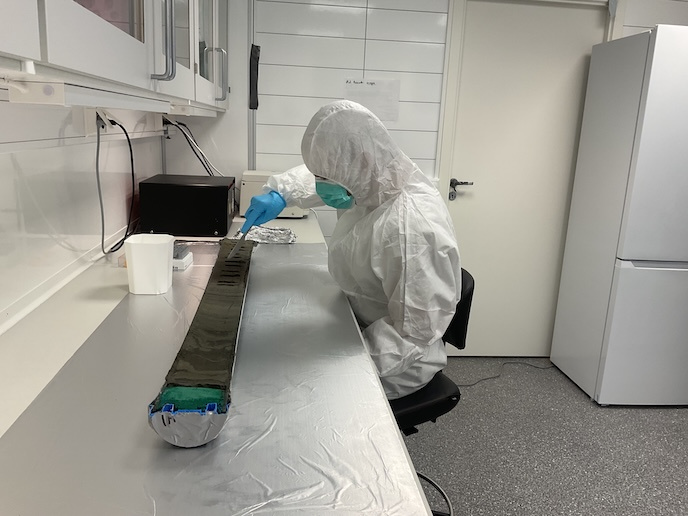
The research team analysed 74 individuals’ dental plaque samples from 28 archaeological sites throughout Europe. These ranged from southern Spain to northern Scotland, dating from around 6 400 BC to the 12th century AD. “We were absolutely astonished,” continued Prof. Hardy. “This is the first time anyone’s ever detected specific evidence for the consumption of seaweed [in dental plaque].” How they prepared and ate seaweed and the aquatic plants remains unclear. “Today, seaweed and freshwater aquatic plants are virtually absent from traditional, western diets and their marginalisation as they gradually changed from food to famine resources and animal fodder, probably occurred over a long period of time, as has also been detected elsewhere with some plants,” explained Prof. Hardy in a University of York news release(opens in new window). “Our study also highlights the potential for rediscovery of alternative, local, sustainable food resources that may contribute to addressing the negative health and environmental effects of over-dependence on a small number of mass-produced agricultural products that is a dominant feature of much of today’s western diet, and indeed the global long-distance food supply more generally.” She added: “It is very exciting to be able to show definitively that seaweeds and other local freshwater plants were eaten across a long period in our European past.”
Not so fast, farming
It was long believed that the start of farming during the Neolithic period made early humans mostly stop eating foods from the sea. “Not only does this new evidence show that seaweed was being consumed in Europe during the Mesolithic Period around 8,000 years ago when marine resources were known to have been exploited, but that it continued into the Neolithic when it is usually assumed that the introduction of farming led to the abandonment of marine dietary resources,” co-author Dr Stephen Buckley, from the University of York, further elaborated. “This strongly suggests that the nutritional benefits of seaweed were sufficiently well understood by these ancient populations that they maintained their dietary link with the sea.” So, will Europeans’ perceptions of seaweed, er, sway? Will seaweed get back on the menu after so long? “It would be a wonderful thing to think that people actually connected in and thought, well, if we ate it before, we can start eating it again,” Prof. Hardy stated in ‘The Guardian’(opens in new window).