Are you a morning person? Thank our prehistoric cousins


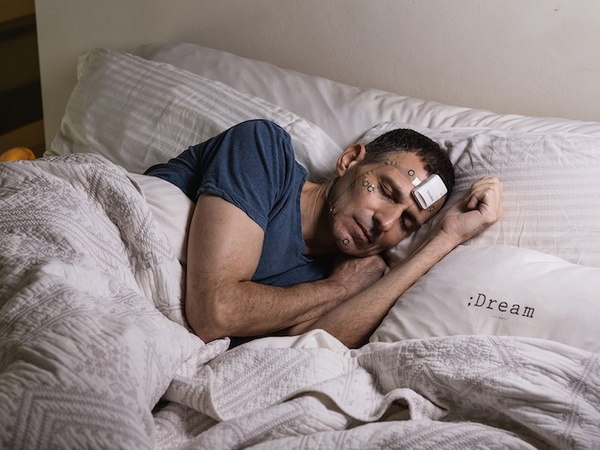
Do you go to bed early and get up early? Credit genes inherited from your Neanderthal ancestors, says a new study published in ‘Genome Biology and Evolution’(opens in new window). Modern humans interbred with Neanderthals. Those DNA traces can be found in people today.
Early to bed, early to rise
By comparing ancient DNA with the genetics of modern humans, a team of American scientists found that many of the Neanderthal genes that remain influence the body clock. Circadian rhythms – 24-hour cycles part of the body’s internal clock – have evolved based on latitude. Neanderthals lived at higher latitudes, which meant longer days in summer and shorter ones in winter. They took advantage of the daylight hours to hunt, with a tendency to sleep and wake earlier. Descendants of the interbreeding inherited body clock genes more appropriate for their new homes in Eurasia after leaving Africa. The scientists examined the genetics data from the United Kingdom’s Biobank, a medical database containing genetic and other health information for hundreds of thousands of people. They found that people today with the same body clock variants as our ancestors were considered to be early risers.
Did the early cave dweller get the worm?
“We found that Neanderthal DNA that remains in modern humans due to interbreeding has a significant… effect,” lead author John Capra, associate professor of epidemiology and biostatistics at the University of California at San Francisco, told ‘CNN’(opens in new window). “In particular, the Neanderthal DNA that associates with chronotype consistently increases propensity to be a morning person.” “We don’t think that being a morning person is actually what was beneficial. Rather, we think it is a signal of having a faster running clock that is better able to adapt to seasonal variation in light levels,” Assoc Prof. Capra explained in ‘The Guardian’(opens in new window). “At higher latitudes it is beneficial to have a clock that is more flexible and better able to change to match the variable seasonal light levels.” So if you wake up with the sun, take a moment to give praise to the genetic mutations passed down from tens of thousands of years ago. If you’re happy snoozing till midday, chances are there are no Neanderthals in your ancestry.