



Decoding the hidden sugar code of disease

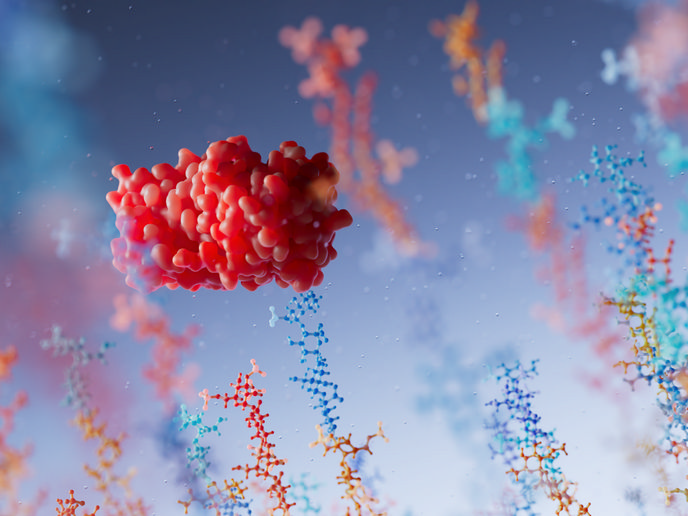
As Europe’s population ages, the burden of diseases with unmet medical needs continues to rise. Neurological conditions such as Parkinson’s disease, alongside cancer, diabetes and inflammatory disorders, demand innovative and cost-effective therapeutic strategies. Heparan sulfate (HS)(opens in new window) proteoglycans are proteins coated with highly sulfated polysaccharides located on the surface of virtually all mammalian cells. By binding a wide range of protein ligands, they regulate development, angiogenesis, blood coagulation, and tumour metastasis. Alterations in HS expression are linked to numerous diseases, including cancer and Parkinson’s disease. Targeting these molecules requires a better understanding of their structural complexity.
Overcoming a technological bottleneck
Conventional analytical methods can provide information on HS composition, but fail to reveal the precise HS modifications. The EU-funded HS-SEQ(opens in new window) project set out to address this limitation by creating an integrated technology platform capable of sequencing heparin and HS. “The key objective was to define the natural HS codes that underpin biological functions,” explains project coordinator Geert-Jan Boons. To achieve this, HS-SEQ brought together an interdisciplinary team of experts in synthetic chemistry, analytical chemistry, physical chemistry, neurobiology and industrial translation. Together, they developed an analytical platform that can simultaneously record multiple molecular properties through different technologies, including mass spectrometry(opens in new window) and infrared ion spectroscopy. By combining these readouts in a continuous workflow, the platform can distinguish isomeric structures that were previously indistinguishable. This is based on a reference database linking spectral signatures to specific structural motifs.
Machine learning for complex spectra
To interpret the complex HS infrared spectra generated by the analytical platform, the consortium employed a machine learning algorithm. Using around 20 reference spectra, the model correctly identified the sulfation pattern. “This was an important milestone, as it showed that the method can identify HS sequences without needing reference data for every possible structure,” highlighted consortium member Kevin Pagel from the Free University of Berlin.
From sequencing to therapy
Beyond analytical innovation, HS-SEQ explored therapeutic applications, focusing particularly on Parkinson’s disease. The degeneration of midbrain dopaminergic neurons is a key pathological feature of the disease, and HS plays a critical role in regulating signalling pathways that control neuronal differentiation. Using human pluripotent stem cell models from Parkinson’s disease patients, the consortium investigated HS-related changes in structure and biosynthesis and their role in neuronal development. Treatment with a specific heparin molecule increased the number of dopaminergic neurons, suggesting a potential protective effect. The project also developed antibody toolkits to identify HS epitopes and explored structure-function relationships relevant to drug development.
Future perspectives
As Boons outlines: “The work does not stop with the end of HS-SEQ. There is still much to learn about HS, and now we have the tools to study its structure and function.” The consortium plans to investigate how different parts of the molecule interact with each other and which forces stabilise its structure at the most basic level. In addition, they will explore the interactions of HS with biological partner molecules. Building on the results of HS-SEQ, further projects will be launched to address these open questions and to extend the approach to new biological systems.