How countries align biodiversity monitoring across Europe


Biodiversity policy often depends on data collected differently across countries. Species lists, survey effort and reporting cycles vary, making it hard to compare trends, spot emerging risks or coordinate action across borders. The European Biodiversity Partnership, Biodiversa-plus(opens in new window), brings together research funders and environmental authorities to improve the monitoring of biodiversity and ecosystem services across Europe. The partnership focuses on coordination and harmonisation: agreeing on what needs to be measured, testing approaches in practice and helping countries adopt methods that fit real budgets and responsibilities.
Building a shared backbone for observation across countries
For monitoring, the first step is to get the right people in the same room, agree on shared obligations and define clear use cases. Petteri Vihervaara, who leads the monitoring workstream of the EU-funded Biodiversa-plus project, explains that “Biodiversa-plus has brought data producers, data users and EU bodies together for the first time.” That shift matters because it moves monitoring away from after-the-fact comparisons of national datasets and towards co-designed frameworks in which partners can agree on requirements, variables and minimum common denominators. In practice, this work is being trialled through thematic monitoring pilots built on standardised protocols. All partners follow the same methodology, launched simultaneously and supported by central coordination, with only minimal adaptation to local conditions. This goes beyond harmonising pre-existing approaches: it generates directly comparable data from the outset, while still ensuring outputs meet policy and reporting needs.
A monitoring pilot for invasive alien species
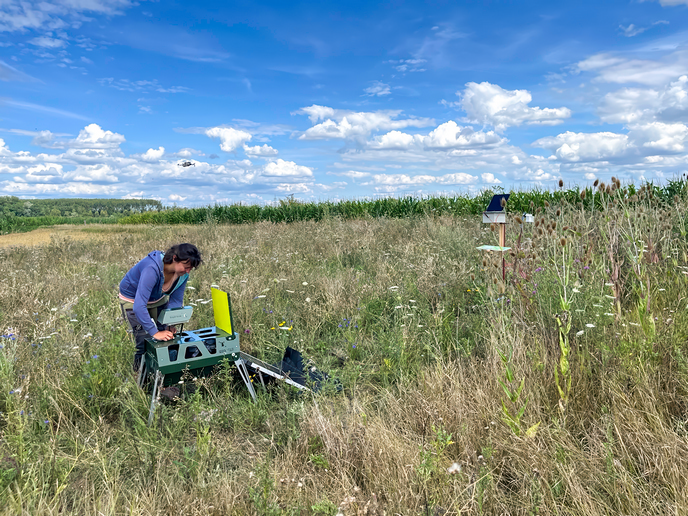
One pilot focuses on invasive alien species (IAS), where speed and consistency are essential. It was designed to test repeatable, scalable approaches that work within existing reporting cycles, while acknowledging uneven national capacities, data gaps and costs. The aim is to translate pilot outputs into routine national monitoring by providing protocol templates, workflows with cost estimates, and practical guidance. Automation is a key part of that plan. Toke Thomas Høye, who coordinates Biodiversa-plus’s invasive alien species monitoring pilot, notes: “Using automated image recognition in an operational context will speed up and standardise the timely mass-monitoring of specific invasive alien species by delivering high-quality monitoring data.” The same processes can also be adapted for other data modalities (e.g. sound) and other taxa, helping countries expand monitoring coverage without relying only on labour-intensive fieldwork.
Linking funded projects to a more usable evidence base
Biodiversa-plus also supports funded projects that tackle monitoring gaps and make outputs more comparable. ANTENNA(opens in new window), a Biodiversa-plus-funded project on pollinator monitoring, is developing transnational data pipelines to turn observations into curated datasets and policy-relevant indicators. This connects to priorities such as insects, habitats, common species and protected areas, while involving scientists, NGOs, citizen scientists and policymakers so that tools can be implemented outside research settings. For DNA-based monitoring, MetaPlantCode(opens in new window), a Biodiversa-plus-funded project focused on harmonising plant metabarcoding pipelines, is working on ‘good enough’, fit-for-purpose alignment. Project coordinator Birgit Gemeinholzer frames what adoption requires: “‘Good enough’ harmonisation for plant metabarcoding would mean that, rather than enforcing identical methods, best practice recommendations (lab methods, reference databases, bioinformatic pipelines) have to be agreed upon that are both scientifically robust and usable by diverse users, from research labs to monitoring agencies and other practitioners.” The goal is to agree on data and metadata standards so results can be shared through GBIF(opens in new window), the Global Biodiversity Information Facility, and interpreted consistently for practical use. Beyond monitoring methods, the partnership also aims to make biodiversity information easier to find and link to decision-making needs, including in areas such as finance and sustainability reporting.