



How gaming hubs are changing Europe’s regional dynamics

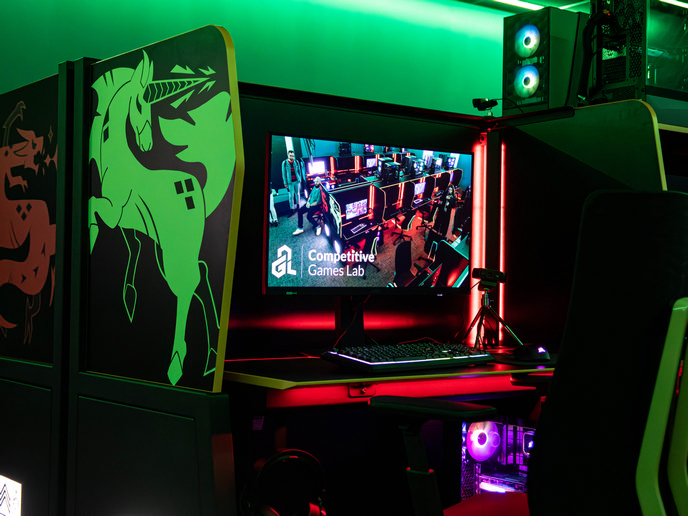
From a post-industrial city in Scotland to a small town in central Portugal, some of Europe’s video game clusters are emerging far from the spotlight. The EU-funded GAME-ER(opens in new window) project is revealing their story, bringing attention to smaller cities and peripheral regions that are quietly becoming hubs of interactive media, innovation and economic renewal. The project has been studying(opens in new window) local and regional video game clusters across five European countries, with the aim of understanding how these ecosystems develop, what supports them and how policy can help them grow. “Highlighting the development of the video game industry in peripheral regions shows how innovation can thrive in unexpected places,” says project coordinator Luís Leça. “These areas can also make a substantial contribution to Europe’s economic and social development.”
Reinvention through play
The GAME-ER project studied six clusters(opens in new window) in Brno (Czech Republic), Lyon and Bordeaux (France), Turin (Italy), Fundão (Portugal) and Dundee (United Kingdom). Many of these clusters share a common origin: regions once dominated by heavy industry, which later declined, leaving video games to become a new driver for economic growth. “Local and regional clusters often emerge in the aftermath of deindustrialisation,” Luís Leça notes. “They can play a crucial role in the economic and social reinvention of their cities and regions.” With their demand for advanced skills, they help prevent the outflow of skilled workers to larger urban centres. Interestingly, the presence of other creative industries such as cinema or print media did not appear to fuel these clusters. Instead, grassroots community activity – computer enthusiast clubs and informal networks – seems to have been more influential in getting the industry off the ground. The six clusters studied vary considerably in their maturity and structure. Dundee and Brno benefit from strong ties to public universities, which supply talent and drive research. Turin relies more on private educational institutions and has received significant support from private actors such as the cultural and innovation hub Officine Grandi Riparazioni. Fundão is at an earlier stage, with the local municipality playing a leading role in positioning video games as a strategic development priority. A recurring challenge across several clusters is the prevalence of work-for-hire contracts, where studios develop games on behalf of other companies rather than owning their own creative output. “In many cases, the intellectual property is owned by non-European companies,” says Stefano De Paoli, project scientific coordinator, highlighting one of the challenges to address.
Putting clusters on the map
Beyond the six case studies, GAME-ER has also produced a data-driven quantitative mapping(opens in new window) of the gaming industry in Europe. It identified the main areas of activity across the continent and estimated their structure within official classification systems, advancing efforts to capture the video game sector accurately. Another key output of the project is the interactive methodological toolkit(opens in new window). “Rather than presenting a static report, GAME-ER wanted to create a practical instrument that connects recommendations directly to the project’s findings,” says Luís Leça. A preliminary version of the toolkit is live for user feedback, showing project data and visualisations that can be filtered by region. The final release, which includes other functionalities and recommendations, is expected in January 2027.