Using CO2 to transition from fossil-based manufacturing

D-CRBN, a climate tech spin-off from the University of Antwerp in Belgium, has developed cutting-edge technology that converts carbon dioxide (CO2) into useful feedstock for a range of chemicals and products. Thanks in part to a European Innovation Council(opens in new window) (EIC) Accelerator grant from the EU, the company has been able to scale up its operations to offer a viable business proposition to industry. “The idea for D-CRBN(opens in new window) came about from a persistent problem we identified in industry,” explains project coordinator and CEO Gill Scheltjens. “All feedstock for generating anything that is carbon-based tends to come from oil or natural gas. This means that these products inherently have a large carbon footprint.”
Replacing fossil fuel-based feedstock
CO2 is made up of carbon and oxygen. But because it is inert, i.e. it doesn’t normally react to other substances, it is simply emitted, as a greenhouse gas, or at best stored underground. D-CRBN’s aim was to kill two birds with one stone – replace fossil fuel-based feedstock with CO2 and turn CO2 into useful product instead of emitting or burying it. To achieve this, the D-CRBN team developed a plasma-based technique that uses electricity to convert captured CO2 into carbon monoxide (CO), a valuable industrial building block. “Plasma is an ionised gas, which is created by putting an electric current through it, in this case CO2,” notes Scheltjens. “When we do this, the CO2 molecule falls apart and is split into its original building block. You get carbon monoxide.”
First industrial-scale demonstrator
D-CRBN was confident that the plasma-based process could be economically viable, even during times of high electricity costs. This potential was recognised by the EIC, which selected the D-CRBN project out of thousands of applications to receive a EUR 2.5 million grant. This scale-up helped to open the door to a series A investment round, raising EUR 17.5 million in funding. “We have been able to identify the site of our first industrial-scale demonstrator,” says Scheltjens. “This is an important milestone, as from here we can look to bring our technology further afield. Countries such as China and India have expressed an interest in collaborating with D-CRBN towards green molecules.”
Promoting carbon capture and utilisation
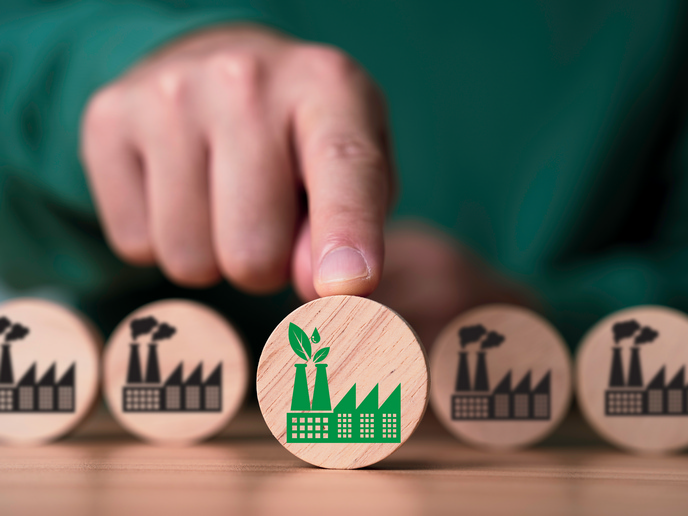
Above all though, Scheltjens and his team believe that this technology will help Europe to lead the charge in building a green alternative to manufacturing based on fossil fuels. “Our main focus will always be Europe,” he adds. “There are huge opportunities for Europe here but also risks that someone else will come and fill this space. This is why we feel this investment has been so important.” Scheltjens is confident that this is a far more innovative and positive innovation than simply capturing and storing CO2 as waste. “What does this mean in reality?” he asks. “It means products based on CO2 rather than fossil alternatives and putting CO2 to work rather than simply putting it in the ground. It is creating added value.” With these first initial successes, D-CRBN is determined to show that carbon capture and utilisation (CCU), rather than carbon capture and storage (CCS), is the smartest way forward for Europe. “We turn an emissions liability into an economic opportunity, making carbon recycling a driver of industrial competitiveness for Europe,” says Scheltjens.