PV, capturing the art of light

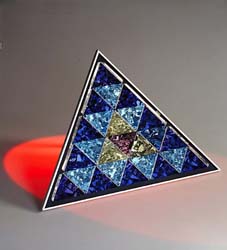
According to the targets set by the European White Paper on renewable energy, the Protocols from the Kyoto Conference on Climate Change and the US and Japanese initiatives, there is likely to be a growing demand for building integrated photovoltaics both in Europe and the world market. The objective of this project is the production of bi-functional pv modules of acceptable efficiency, of high visual appeal and artistic merit which should lead to a stimulation of the market for building integrated photovoltaics. The enhanced visual appeal is generated by combining high efficiency multi and mono-crystalline silicon solar cells of different colours with various sizes, shapes and textures into a facade element. Some of the problems encountered during the course of this project were interconnection design, production process towards larger grain sizes and homogeneous electronic and optical surface quality. The partnership, consisting of a materials producer, a solar cell manufacturer, a façade designer, architects and building consultants worked closely to overcome these, producing pv-panels with a very high level of visual appeal which can be regarded as works of art, while at the same time are fully functional. These prototype pv-modules form the basis of a new range of products for building integration giving designers a greater freedom to specify the use of photovoltaics in a way which enhances the functionality and appearance of buildings.