


Research and the Swedish Presidency - Swedish Research Minister talks to CORDIS News
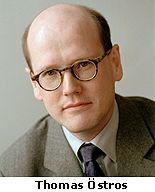
Following Sweden's assumption of the European Union's Presidency at the beginning of January, interest has mounted about what the focal points will be of the next six months. While environment, enlargement and employment are Sweden's clear stated aims, the role of research and its development during the Presidency have received less coverage. In the following interview, in which Swedish minister for education and research, Thomas Östros, talks exclusively to CORDIS News, the minister clarifies these issues, along with presenting his views on the next EU Framework programme and concrete results he would like to see from the Presidency. CORDIS NEWS What will Sweden bring to the Presidency? MINISTER ÖSTROS The general idea that is important is that politics do matter when we develop society. There may have been an impression that politics are stepping back, but the lesson learnt from the 1990s is that increased political efforts are needed not least in education and science. This was highlighted at the Lisbon summit. We see it evidently that in those European countries that have put political effort into education and science have been successful. In that meaning science and education have become an important part of general economic policy. This applies to traditional industries too. The Nordic experience is that our old industries have changed [with hi-tech advances] and become more knowledge-based. This is a powerful argument for the European Model. It is reasonable to have quite high taxes because if we use them intelligently, we can compete successfully. Many European countries have a good economical development. Some successful examples of where efforts in education and science have led to economic growth are Spain, Portugal and Ireland. At the European Summit in Stockholm in March, we want to highlight the next phase of development, such as biotechnology and life sciences, which will be key areas in industrial development in the future. CORDIS NEWS How will research help Sweden to develop its three priorities during its Presidency: employment, enlargement and environment? MINISTER ÖSTROS What drives employment is the knowledge-based industry. Resources in research and education are the most important growth-stimulating instrument today. Education can create a flexible labour market and contribute to entrepreneurship In the context of the enlargement of the EU, one of the most important parts is how we connect societies. Research is a strong international force connecting new member countries. We saw that in Sweden. When we joined, our researchers turned to European partners to a higher extent. Regarding environment, it is not possible to have an environmental strategy without including research policy. We must ask questions like: 'what will be the effects of global warming' and how we can find solutions. CORDIS NEWS How important will concrete progress on issues such as researcher mobility be in the Swedish Presidency's agenda? MINISTER ÖSTROS The Commission will give its proposal for the Sixth Framework programme in about a month, I would like to see that a larger share is put into mobility programmes and into connecting research programmes from the Member States. There is also an expert working group, that will look at the obstacles to increasing researcher mobility, such as social and tax issues, but its conclusions will not be available during the Swedish Presidency. We can contribute by making the work of the high level expert group as efficient as possible and by creating driving forces for increased mobility. CORDIS NEWS Is there a danger to smaller countries in the fact that the next Framework programme will have a great deal of emphasis on larger issues and bigger projects? What are your feelings as a representative of one of these smaller countries? MINISTER ÖSTROS We feel that we [Sweden] have good experiences from the research projects in FP4 and FP5. I think it is an interesting idea to have more of concentration into fields like biotechnology and nanotechnology and it is important that we have bigger projects. It is self-evident that we cannot have a Framework programme that is designed for the bigger countries only. The Commission is aware of the concerns of the smaller countries and I am aware of the conflict. The Framework programme must enhance quality, basic science and benefit all. We will have a discussion on these issues both in March in Uppsala and in June at the Council´s meeting. CORDIS NEWS How much collaboration has there been with the previous European Presidency, of the French? MINISTER ÖSTROS We want to be connected to the former Presidency. What we want to highlight in Stockholm in March is to follow up on the Lisbon summit and see education and science on the agenda for Stockholm. We would like to see a process that gives the Commission a mission to work on a direct strategy to develop biotechnology and life sciences. Moreover, during the French Presidency, the Commission and the Presidency started the 'science and society-debate', both on how we can attract young people to science and how scientists relate to citizens. This will be the topic in Uppsala. We want to take this forward. We want to highlight the ethical issues of science and we will have a conference in Umea in June about this. I hope that discussion could stimulate the debate in other Member States as well.
Kraje
Sweden