


Europe has lost its research culture - Busquin
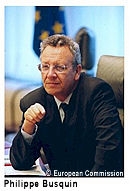
'Europe seems to have lost [its] culture of research and science which has been the origin or its development and success in the past,' said Research Commissioner Philippe Busquin in Lausanne, Switzerland on 30 March. Speaking at the Ecole Polytechnique Fédérale de Lausanne, Mr Busquin highlighted the paradox that research is playing a more and more important role in our society and is responsible for between 25 and 50 per cent of Europe's economic growth and yet Europe invests less than its competitors in research, and in absolute terms is investing less and less in research and innovation. The problem is not, fundamentally, a question of means as the gross national product of the EU and the USA are comparable, said the Commissioner. The problem relates to the culture of research. 'A joint effort between the Member States and the Community is therefore necessary in order to give Europe back a research capacity at the equal to its needs and socio economic challenges with which it is confronted,' said Mr Busquin. The Commissioner went on to outline the measures that the Commission intends to take in order to take European research forward. He reminded his audience that the next framework programme will not be a sixth 'national programme', but will be an important financial tool, essential for the implementation of the European Research Area (ERA). The realisation of the ERA depends on further integration of European research, human resources and the mobility of researchers, better usage of research infrastructures, an improvement of the relationship between science and society, the opening up of national programmes, support for scientific cooperation carried out at different European levels, for example in the European Space Agency (ESA) and CERN (European organisation for nuclear research) and COST. Mr Busquin expressed his regret that Switzerland is not yet fully involved in the Fifth Framework Programme despite the signing of an agreement in 1999. The agreement is still waiting to be ratified by eight Member States. He told his audience that he hoped this would be resolved before October of this year, allowing the agreement to come into force on 1 January 2002.