


Busquin endorses JRC's role in helping turn scientists into businessmen
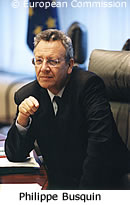
European research Commissioner Philippe Busquin, speaking in the JRC's (Joint research centre) latest newsletter, claims that risk capital investment is still too low in Europe, and welcomes the efforts that the JRC is making to help bridge the gap from promising research projects to commercial products and services. 'One of the tenets of the European research area (ERA) is to maximise the conditions for dynamic investment. These include creating positive attitudes towards risk, enterprise and new technologies, easy access to risk capital, dissemination of new knowledge and ideas and availability of qualified people,' he said. He went on to endorse the activities that the JRC has embarked upon to address these areas, saying that 'such initiatives need to be promoted.' He highlighted some of the specific areas which have benefited researchers in taking their research beyond the laboratory. In June 2001, for example, the JRC opened a new incubation facility, which it has established with the support of the regional policy Directorate general. The initiative will not only help new spin off projects in practical areas such as intellectual property rights, business plans and feasibility studies, but will also help ensure that technology transfer takes place to innovative SMEs (small and medium sized enterprises) in less favoured regions of the European Union. The facility is run by an external contractor and is designed to bring two or three projects to market a year. The JRC has also been working with a venture capitalist firm to ensure that a steady flow of capital is available for technologies which could have commercial applications. Two companies have already been formed using this means, with a third expected shortly. Finally the JRC has launched an innovation competition, which it hopes will narrow the gap between having a promising patent on a new technology and producing a commercial product. This is designed to ensure that more of the average of 15 new patents filed a year by JRC projects become commercial products/technologies. In a wider context, the JRC has also joined the EXSIF project, funded by the Enterprise Directorate general. This involves public research centres pooling resources and information in order to promote hi-tech spin offs from the more 40,000 researchers in these centres. 'Striving for excellence in its areas of competence, the JRC is benchmarking with the best and sharing its best practice, including technology transfer,' says Commissioner Busquin. 'I endorse the efforts of the JRC to be at the forefront of EU innovation policy.'