


Coleman says EFA will help to build public trust in GMOs
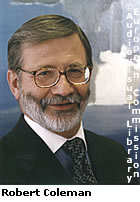
The director general of the EU's Health and Consumer Protection DG, Robert Coleman, has said that the proposed European Food Authority (EFA) will play a key role in combating public mistrust of genetically modified organisms (GMOs). During a talk on 'communicating risk to consumers' at the Syngenta round table in Brussels on 17 October, Mr Coleman said that the unwillingness of EU consumers to accept GM produce stems from the fact that many are no longer 'convinced by a purely scientific or technical approach, or indeed of the authority of scientific opinion itself.' He added: 'Against such a background, it is not perhaps surprising that consumers may resist technical innovation when they feel that there are 'low tech' options available in which they have confidence.' 'This is not an irrational position,' Mr Coleman explained. 'For many, experience has shown that one day's scientific 'truth' turns out later to have been based on a partial understanding. Science has limits and when those limits are ignored, there is a loss of credibility in the whole approach.' Mr Coleman said that the creation of the EFA, due to be set in motion next year, will help to combat public mistrust of GMOs by further separating those responsible for food production from those responsible for assessing food safety, ensuring independent scientific assessment which consumers may find easier to trust. 'The EFA has one important advantage over the other institutions,' Mr Coleman said, 'as its proposed constitution is one of an independent organisation, free of political or other vested political interest.' Mr Coleman said the new body would 'act with openness and transparency,' with its meetings and methods of working open to public scrutiny. Mr Coleman explained that the public stance on GMOs may also reflect differing approaches to risk evaluation: 'Whereas experts think about risk in terms of risk estimates arrived at through scientific methods, the general public is more value driven.' He explained that the public is less willing to accept risks which also challenge other beliefs and values, such as animal welfare. He added that the task of winning over European consumers is made even more difficult by the lack of clear benefits of GM produce: 'Entirely rationally, consumers balance risks and benefits. 'In the GM field, the task of communicating the limited nature of certain risks will become easier when consumers can see for themselves clear benefits as regards the final product.' Mr Coleman's approach signals a less hardline stance than that adopted by Health and Consumer Safety Commissioner David Byrne, who has called for political leaders to lead a rational, 'science-based' debate on the issue of GMOs, issuing a stark warning that unless European consumers gain confidence in biotechnology 'then GM is dead in Europe'.