


Commission's lifelong learning communication looks to galvanise skills base...
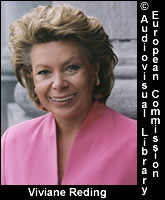
On 21 November the European Commission adopted a communication on creating a European area of lifelong learning, designed to address the creation of a skills based required for the knowledge-based economy. The communication was adopted following a proposal from Education Commissioner Viviane Reding and Employment and Social Affairs Commissioner Anna Diamantopoulou. Commissioner Reding said that only 10 per cent of Europeans of working age undertook any training in 2000 and warned that this low level of skill acquisition is a threat to the Europe's ability to keep pace with a fast-changing knowledge-based economy. 'This is manifestly not enough,' she said, 'and if we do nothing about it then Europeans will find it difficult to be part of an international economy and of societies in which knowledge an skills are becoming obsolete ever more quickly.' Ms Reding added that the communication provided the Member States and the economic and social players with the tools to invest most effectively in training and human resources and consequently in sustainable prosperity. 'One of the next steps could be to develop trans-Europe networks of knowledge and science in order to enhance the competitiveness of our human resources.' The move is a response to changing conditions which require action, according to Commissioner Diamontopoulou. 'To keep pace with developments in technology, globalisation, population ageing and new business practices, particular attention should be given to workplace training, an important dimension of our strategy for Lifelong Learning.' The communication adopted by the Commission follows a broad European level consultation in which 12,000 people took part. The Commission proposes introducing a high level group of representatives from EU ministries responsible for lifelong learning in order to tighten coordination between the Community and Member States. The communication sets out six key elements for effective education and training strategies. These include building up partnerships on several levels - between national, regional and local decision-makers, between public authorities and educational institutions, and between businesses and social partners such as research centres. The communication also calls for a redefinition of basic skills on the basis of an analysis of learning requirements in the knowledge-based society, and for 'a substantial increase in public and private investment in learning.' It explained that this could be achieved by redistributing existing resources, encouraging new investment partners and introducing tax incentives for those undertaking training, rather than increasing public budgets. The communication also proposes measures to make learning provision more accessible and visible, such as the creation of local learning centres and facilities to make learning at work easier. It says that special efforts are required in this context for groups such as ethnic minorities, people with disabilities and those living in rural areas. In addition, the communication says measures should be taken to give learning a higher profile and foster a culture of learning, and to introduce quality control and indicators to measure progress and reward achievements. The communication also sets out measures to support lifelong learning strategies. It says that in 2003 the Commission will introduce a transnational mechanism for accumulating qualifications along the lines of the European credit transfer system (ECTS) currently used by universities. By the end of next year, the Commission will also introduce a 'portfolio' system for presenting qualifications and skills. Also in 2002, the Commission intends to launch a web site on learning provision in EU Member States and applicant countries, and establish a European guidance forum to encourage the exchange of good practice. Furthermore, the communication suggests that the European investment bank's 'Innovation 2000' initiative and the European investment fund could be used to support lifelong learning initiatives, along with regional and social community funds such as the European regional development fund (ERDF) and the European social fund (ESF). The Commission also intends to encourage quality control through the granting of a European label. The Commission will report to the European council and the European parliament in 2003 on progress made with lifelong learning in the Member States and at the Community level. The communication is part of the Commission's contribution to the March 2002 European Council in Barcelona and is a response to the Feira European Council in June 2000 called upon the Commission and Member States to define a strategy to allow access to lifelong learning for all Europeans. Several actions are currently in progress to improve lifelong learning in the EU, including the eLearning action plan to increase the use of new information and communication technologies in teaching.