


ESA research helps sewage disposal
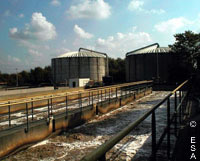
Research funded by the European Space Agency (ESA) into ways of feeding astronauts on future missions to Mars is being given a new, less savoury application - helping to dispose of the sewage sludge left over after wastewater treatment on Earth. The MELISSA (Micro-ecological life support alternative) project, which ESA is funding in companies and research institutes throughout Europe, is developing a system of recycling as much of the waste produced by astronauts on long missions as possible so it can be used for food and other consumables. Now EPAS, a Belgian company participating in the project, is using some of the research results to devise methods of reducing the amount of solid material left over after sewage treatment. Current technologies can reduce the amount of solid waste left in effluent such as pig waste, vegetable waste or sewage by a maximum of 40 to 60 per cent, explains EPAS's Dr Dries Demey. At present, this undigested fraction is disposed of in landfill sites or by spreading on agricultural land. In space, where both resources and living room must be used as efficiently as possible, it is essential to find a use for left-over waste solids. On Earth, where land fill costs are rising, it would also be useful to find an alternative way of using the residue. Dr Demey says that a method which makes use of hydrogen peroxide has seen some success. 'We've been able to remove 85 per cent of the solid waste and convert it into water and methane gas, which can be used to generate electricity,' he explains. 'The only obstacle is that the cost is higher than that of current disposal methods, but this will change in future.' But while flammable methane may be a useful product on Earth, it could cause a disaster in space. Christophe Lasseur, MELISSA project manager, said ESA is working on a way to slow down the fermentation process and halt it before methane is produced. In the MELISSA system, the fermentation process is used to break down organic waste to produce ammonium, which is then converted into nitrates. These in turn are used to feed the plants that astronauts eat for dinner.