


Science has made the world seem more uncertain, says eminent British scientist
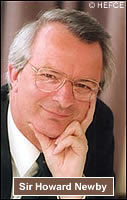
Science has made the world seem a more uncertain place, Sir Howard Newby, president of the British association for the advancement of science, told the British association science festival on 9 September. Sir Newby believes that a list of recent phenomena, including nuclear power, pesticides and cancer, the ozone layer and cloning have fuelled the public's distrust in science, which has not been helped by a lack of communication between scientists and society. 'It has been estimated that the sum total of scientific understanding in the past 50 years has been greater than in all previous history. Yet for all that we seem to know, the world appears to be an increasingly uncertain place,' said Sir Newby. 'If anything, we have succumbed to a lack of faith in the notion of social progress and a suspicion amounting to an assertion that the growth of knowledge does not guarantee human happiness - rather the reverse. An increasing proportion of the population seems to distrust rational inquiry to establish both the facts and the uncertainties; rather they prefer their instincts, or even to celebrate anti-intellectualism,' he said.