


International project to study Arctic ozone depletion begins
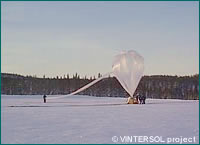
A new campaign to examine Arctic ozone depletion using aircraft, balloons, ground-based instruments and satellites got underway on 23 October, and brings together national and EU funded projects. VINTERSOL (Validation of international satellites and study of ozone loss) will be closely coordinated with a USA/NASA project. The joint initiative will therefore involve around 350 scientists from the EU, Canada, Iceland, Japan, Norway, Poland, Russia, Switzerland and the USA. Nine EU funded projects are included in the network. 'This joint project is in the spirit of the 1998 European Union-United States science and technology cooperation agreement,' said EU Commissioner for Research, Philippe Busquin, at the launch event. '[The project] will help us to meet the requirements of the Montreal Protocol on ozone depleting substances, fine tune our polices with sound scientific evidence and upgrade Europe's role in the international scientific arena,' he said. The project will run until mid 2004. The first phase will focus on the Arctic, the second on Antarctica and the third on Brazil, where atmospheric processes in the tropics will be studied. Data from the European Space Agency's ENVISAT satellite will be used by the consortium, and in January 2003, researchers will use the high flying aircraft M55 Geophysica, the German DLR Falcon and NASA's DC-8 to take measurements of stratospheric composition. Research balloons will also be launched from Kiruna.