


Commission research on 'green' procurement points the way for local authorities
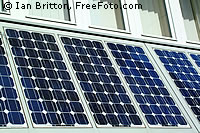
EU funded research into the benefits of environmentally friendly procurement by Europe's local authorities has shown that if every public body switched to renewable electricity sources, the reduction in greenhouse gas emissions alone would be equal to 18 per cent of Europe's total obligation under the Kyoto protocol. This is just one example of the benefits highlighted by the RELIEF project, which is setting guidelines for local authorities to adopt a more environmentally friendly approach to the purchase of electricity, construction, information technology equipment, food and public transport. The project is funded under the energy, environment and sustainable development section of the Fifth Framework Programme, and involves six local authorities in Denmark, Germany, Hungary, Sweden and Switzerland. EU Research Commissioner Philippe Busquin explains: 'Thanks to this data, public administrations can begin to make informed choices about their responsibility to the environment and to citizens' quality of life.' The study, which runs until September 2003, not only seeks to highlight the environmental impacts of eco-friendly buying, but also the financial gains. The local authorities involved found that aside from the obvious benefits to the environment, eco-friendly products also proved to be high quality and cost effective. For example, the bodies concerned noticed significant savings on their energy bills after switching to renewable sources of electricity, and organic food in staff canteens proved to be as cheap as traditional food. In order to drive home the benefits of such approaches, the RELIEF research team transferred the data of from their findings into 'person equivalents'. As a result, local authorities can see that if they all switched to renewable electricity, greenhouse gas emissions would be reduced by an equivalent of over seven million Europeans. Equally, the introduction of water saving taps and flushes across Europe would reduce water consumption equivalent to that of more than three million people, and providing organic food in all public canteens would represent a relief on water and soil equivalent to the impact of a city the size of Berlin, around 3.5 million people. But the RELIEF researchers don't believe that the benefits would stop there. Using the example of energy saving computers, they say that a switch to such equipment in public bodies would reduce greenhouse gasses equivalent to that of 100,000 citizens. However, the high level of public procurement of computers would mean that such a move would push suppliers towards offering more and more green devices, and could result in a tenfold indirect reduction of greenhouse emissions. The challenge now for the RELIEF team is to promote the findings of their work, which they intend to do through training sessions, information dissemination, networking and joint procurement programmes across Europe. The initiative will also be presented at the EcoProcura conference in Gothenburg, Sweden, from 8 to 10 September. 'The challenge for the public authorities now is to integrate the environment into their procurement policies, and to use their purchasing power to set a benchmark for suppliers [...] and set an example to private consumers,' said Mr Busquin.