


Team of European researchers facilitate better diagnoses of brain tumours
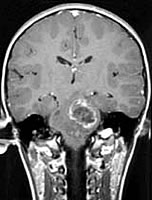
A team of European researchers has developed a computer- based programme that enables physicians treating patients with brain tumours to obtain faster, more accurate and entirely objective diagnoses without the need for brain biopsy. In a preliminary test, the system was used on 16 patients and achieved a 92 per cent rate of reliability in diagnoses. Carles Arús, professor at the Department of Biochemistry and Molecular Biology of Barcelona Autonomous University, led the team in carrying out the EU funded project INTERPRET (international network for pattern recognition of tumours using magnetic resonance). He explains that 'The goal of this project was to develop a computer-based decision support tool, installed in hospital MRI centres, that enables radiologists and other clinicians without special knowledge or expertise to diagnose and grade brain tumours routinely using magnetic resonance spectroscopy (MRS).' There are 50 different types and grades of malignant tumours. This new user-friendly tool, drawing on a database with information on 300 brain tumours, visually classifies the different types of tumours according to their magnetic resonance spectra. A point on a graph represents each type of brain tumour. Tumours with a similar origin appear on the graph in positions close to one another. Radiologists can, therefore, obtain information on the likelihood of an unknown tumour being either one type or another according to the area of the graph on which it is found. Previously, 'although MRS gives significantly improved brain tumour categorisation, it was not widely used, partly because radiologists had difficulty in interpreting spectral data,' said Professor Arús. Now, radiologists can diagnose and grade brain tumours in a simple and efficient way, and; more importantly, no longer need to resort to brain biopsy which is invasive, dangerous and does not always give the right answer. This knowledge-based system is expected to enhance the applicability of the MRS technique and accelerate its take-up in Europe
Kraje
Spain