


Germany and India commit to increased science cooperation
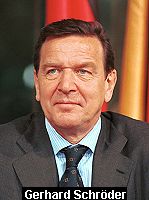
The governments of India and Germany signed a memorandum of understanding (MoU) on 6 October for increased cooperation in science and technology. Signed during German Chancellor Gerhard Schröder's two-day visit to India, the agreement paves the way for extended collaboration in fields ranging from aerospace to nuclear technology, biotechnology and pharmaceuticals. 'We should tap the enormous potential of both countries through cooperation in the area of science and technology,' said Mr Schröder, stressing that scientific development was important for both countries facing similar challenges and competition. Under the MoU, up to 15 fellowships will be awarded to Indian scientists having completed their doctorates. The fellowship will allow them to conduct research at a Max Planck Institute in Germany for four years. Germany will also provide partner groups in India - The Indian Institute of Technology in New Delhi, the Indian Institute of Science and the National Centre for Biological Sciences in Bangalore - with funding for five years. Furthermore, the Max Planck Society is setting up a new division to manage relations with three countries, including India. 'We now have well established mechanisms through which we can take up any kind of collaboration,' declared Indian Science and Technology Minister Kapil Sibal. '[Against] this backdrop it is time to launch some major flagship R&D projects with high visibility and also formulate collaborations involving industry and R&D institutions,' added Mr Sibal. Mr Schröder also inaugurated the Indo-German science circle (IGSC), a network of Indian and German scholars and research institutions, and launched a new website managed by Germany's education and research ministry and tailor-made for Indian students and scientists. 'Here, as well as in our country, people are the driving force for economic and social development. Using this as a forum, our scientists will be able to meet, exchange views, making India and Germany even closer partners,' Mr Schröder concluded.
Kraje
Germany, India