


Despite poor progress, Lisbon agenda needed more now than ever, concludes Kok report
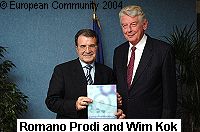
While external events have not helped, much of the responsibility for the current failure of the Lisbon strategy lies with the EU and its Member States, who have failed to act with sufficient urgency, according to a long-awaited report drawn up by former Dutch Prime Minister Wim Kok and his high level group. The report measures Europe's progress against reforms introduced by Heads of State and Government at the Lisbon Council in 2000, designed to close the economic gap with the US and Japan. It concludes that 'halfway to 2010 the overall picture is very mixed and much needs to be done in order to prevent Lisbon from becoming a synonym for missed objectives and failed promises.' Some of the blame is placed on factors beyond the control of EU governments, with the report noting that: 'The ink had scarcely dried on the agreement before the worldwide stock market bubble imploded, the epicentre of which was the collapse of the overvalued prices of American dotcom and telecom shares amid evidence of financial and corporate malpractice.' Yet the high level group clearly feels that despite the backdrop of a challenging global economic environment, Member States could and should have done more to achieve its goals. Governments are accused of not taking the delivery of commonly agreed measures seriously enough, perhaps because of a lack of political pressure from national parliaments and citizens who have not been sufficiently involved in the Lisbon process. Poor coordination, an overloaded agenda and conflicting priorities are also to blame, the report adds. The inevitable result is that many Lisbon targets will be 'seriously missed'. Despite an obvious sense of disappointment, however, the report stresses that 'Lisbon is not a picture of unrelieved gloom, as some like to paint.' Significant progress has been made on employment and in the spread of information and communication technologies (ICTs) to schools, businesses and homes. The high level group clearly believes that Lisbon is the right agenda for the EU's particular blend of economic, social and environmental ambitions. 'Whether it is life expectancy, infant mortality rates, income inequality or poverty, Europe has a much better record than the US. [...] Lisbon's direction is right and imperative, but much more urgency is needed in its implementation.' The group is against moving the now seemingly unachievable deadline of 2010 to a later date, saying that the current target is needed in order to galvanise Member States into action. As to what form that action should take, as far as the high level group is concerned, the main priorities are clear: 'Europe, in short, must focus on growth and employment in order to achieve the Lisbon ambitions,' it states. Further clarification of the strategy is also needed, as currently 'Lisbon is about everything and thus about nothing. Everyone is responsible and thus no one.' Within an overall focus on growth and employment, Mr Kok's group identified five broad policy areas: the realisation of the knowledge society; the completion of the internal market and promotion of competition, including services and financial services; the establishment of a favourable climate to business and enterprise; building an adaptable and inclusive labour market; and the vigorous promotion of win-win environmental economic strategies. Within each policy area, the report makes a number of key recommendations. For example, in building a true knowledge society, the group calls on the Council to reduce the obstacles preventing researchers moving to and within the EU, to establish an autonomous European Research Council (ERC) to fund basic research, and to either adopt or scrap proposals establishing a Community Patent. However, having learned the hard way during the first half of the Lisbon process that having the right policies and targets is no guarantee of success, the high level group goes on to detail proposals aimed at 'making Lisbon work'. First, closer cooperation is needed between the various stakeholders in the Lisbon process, from national parliaments and citizens to social organisations, who must commit to encouraging and supporting each other and put more pressure on their governments to deliver the necessary reforms. Member States are urged to prepare national programmes in order to commit themselves to delivery, while the Commission should review and report on their progress, being prepared to 'name and shame' those that fail and 'fame' those that succeed. 'Too much is at stake to respect the sensibilities of those who hinder the pursuit of the common European good,' the report warns. The report's conclusion is clearly aimed at Europe's national governments, confirming that in the opinion of the high level group, this is where the biggest improvements in performance must be made. It plays down the scale of the task, saying: 'The programme of reform outlined in this report is eminently deliverable and will bring improvement. It needs to be clearly understood and explained, and then delivered.' The final message is clearly aimed at Europe's leaders, who met in Brussels on 4 November to discuss the report the day after it was published. 'In the end, much of the Lisbon strategy depends on the progress made in national capitals: no European procedure or methods can change this simple truth. Governments and especially their leaders must not duck their responsibilities. Nothing less than the future prosperity of the European model is at stake.'