Computed visual perception

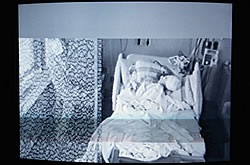
Visual information processing is conducted by a set of processing operators acting on the image that are organised in complex, hierarchically structured layers. The activity of these processing operators is further translated by employing simple computing networks, such as a mesh of active resistors or a neural biological network. Based on these concepts this project developed an analog engine for addressing specific visual tasks at perceptual level for breakthrough developments. This system is essentially an analog integrated circuit that comprises a well-organised mesh of simple interacting elements for visual information processing. Acting as fine tuned filters these elements serve to extract local features from an image in real-time from recurrent interaction of neighbouring pixels. In this way, they are capable of addressing several kinds of complex information processes that characterise typical tasks of visual perception. The sensorial/computational system has the potential to find numerous applications in many industrial, consumer and medical products for performing alerting and guidance tasks. These might include sensors employed as rear-view-mirrors in a car safety-system or in general, behavioural systems able to provide a reflex as a shortcut to action. Other applications might include detectors for identifying movement of infants/patients at home or at health-care structures, or vision aids for elderly and handicapped people.