Paper industry gets effluent transplant

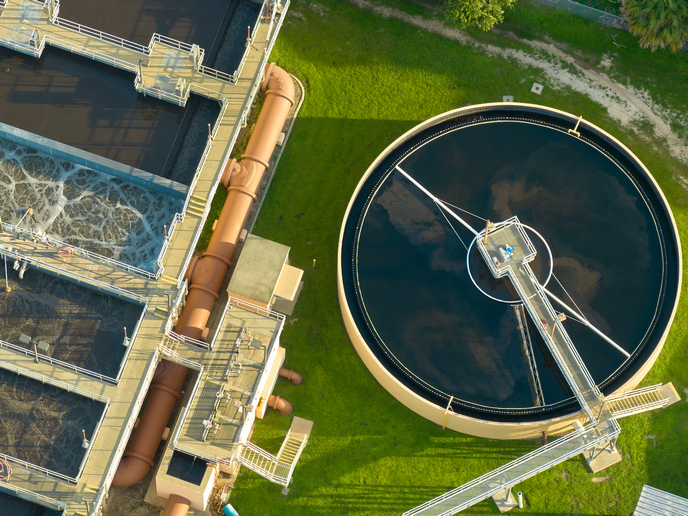
Called somewhat affably as the "kidney" technology, this new, integrated biological water treatment now offers three steps of refinement through which the water is transmitted. The anaerobic purification step, the aeration step and a solids separation step all of which provides the means to then redirect the water back to the paper mill for reuse. Since the European paper mill industry uses 1.4 billion cubic meters of effluent water per year, reducing its polluting content remains a focal point for the industry. For those not operating on a closed cycle basis, pollution reduction is essential. However, even closed cycle paper production faces severe operational difficulties that all too often result in re-opening their waste discharge avenues back into the environment. The developed kidney technology advances two integrated treatments for waste that hold enormous benefits for both industry and environment in the effective reduction of many of its pollutants. The Pressurised thermophilic aerobic treatment and the thermophilic anaerobic treatment combined with ultrafiltration do not only provide better production, but also require less energy. The technology has several innovations behind it. Not the least of which are submerged membrane technologies and a crystalline bioreactor. In the former case, a biological pre-treatment stage was introduced in order to improve membrane performance. This resulted in significant retention capacities of the membranes showing a 30-45% improvement. The bio-reactor primarily precipitated substances such as salt and calcium carbonates. The latter is recycled into pellet form that can be latter used as soil conditioner or for flue gas treatment at power stations. Overall, significant reductions in effluent pollutions have been achieved in working models built by PTS in Munich for VPK-OUDEGEM in Belgium, at SAICA in Spain and at John Zink International Luxembourg.