


Israel's chief scientist of the ministry for industry talks to CORDIS News
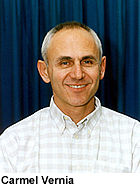
Carmel Vernia is responsible for Israeli government policy on R&D for industrial research and development. Unlike other countries there is more than one institute in charge of all R&D policy in Israel, dividing up the grants system for academic and industrial R&D. As Chief scientist of the Ministry for Industry, he is responsible for some 250 to 300 million euro - about 60 per cent of the country's national expenditure on R&D. In an interview with CORDIS News, Mr Vernia explained how and why he is trying to encourage Israeli industry to participate in the Fifth Framework Programme. Israel's performance so far, he believes, could be better. Despite having some familiarity with the EU RTD programme from participating in the latter part of the Fourth Framework programme, industry was slow to start, he says. But awareness is growing all the time: ' The trend is positive...People know more about it and are more encouraged because they have already seen some success stories. I think it's a natural learning curve situation. There were many people in industry that were sceptical in the beginning who are now beginning to consider it seriously.' Carmel Vernia speaks from experience. Before joining Government eight months ago he worked for Israeli hi tech company Comverse, where he was involved with two projects in the European Framework programme. Their success made it a good experience he says, but initially he shared the concerns of many Israeli industrialists. 'They heard that the bureaucracy was quite extreme and that the success rate is low: one out of four or five,' he told CORDIS News. 'The effort to find partners in Europe is quite steep and they had alternatives in the grants that I'm providing and from other bilateral negotiations.' But times have changed and Israeli companies are waking up to the advantages of the Framework programme at the same time as the Chief scientist's resources are harder to come by. Companies are realising that participating in the Framework programme is not as troublesome as they had imagined. 'You can manage the bureaucracy. There are success stories and Israeli companies are doing OK,' says Vernia. Being a small country has forced Israeli companies to pitch themselves to the global market, he continues. 'Every company from day one thinks internationally.' Traditionally, Israel has had strong industrial links with the USA, but it has always wanted to strengthen links with Europe. 'Europe is as important as the US in terms of market size, technology base, and potential for partnering...I think that the right way to put it is that Israel always wanted Europe but Europe discovered Israel only recently. ' Israeli industry has a lot to offer European partners he continues: 'I think that Israeli hi-tech companies and entrepreneurs are extremely creative. They are very hard workers and they are very committed to their jobs. And I think Israel in general enjoys wide acceptance in the US market, which will be less open to some other countries. At present Israel has a lot of exposure in terms of the stock markets which many European countries, especially the smaller ones don't have.' Israeli's linguistic ability is also a bonus, he adds: 'It's very easy to communicate with us, certainly in English and very often in additional languages. And we're at the forefront of technology.' They are also flexible and quick to respond to change, says Vernia: a trait he attributes to a national mentality rather a particular policy. 'We're used to being suppliers of customers all over the world so we stretch our working hours, our working habits. The local market is almost minute. That's why we have to pitch ourselves to be very flexible. ' Entrepreneurial sprit also runs high in Israel - particularly in the biotechnology and high-tech sectors. The Ministry for Industry is keen to encourage start-ups, but according to Vernia, again the figures reflect more of a cultural attitude than any legal incentives, although he does encourage people to take risks. 'It's OK to fail and try again,' he says, 'maybe that's why people dare to take risks...I prefer to support higher risk projects. 'One of our programmes that I administer is an incubator programme where we deliberately accept only programmes, which are too high a risk for private investors to invest in. We provide these projects with housing for up to three years and a little money to get to the stage where they will be able to attract private investment and if they fail it's OK. They only lose a little bit of money and then they try again, maybe developing new technologies and trying new things.' 'One other reason the Israeli industry is so strong is because 20 years ago there was a lot of investment in defence-related research. There was a very strong local demand for such technologies, which is why we were able to develop such a very high level of technical equipment. ' Participating in the EU Framework programme is now helping Israeli industry to develop even further by encouraging linkages between industry and academia. 'I'm sure that qualitatively it has had an impact.' says the Chief scientist. 'I have a similar programme in Israel that encourages cooperation between research institutes and industry and I think the effect of the Fifth Framework Programme in this context is more significant.' Watching the Brussels-based discussions on a European Research Area (ERA) evolve, Mr Vernia anticipates that changes to EU research policy may affect Israel's participation in the future. 'I can't help saying that we feel a little bit outside the rest of Europe. And whatever the Europe decides to do with the Sixth Framework Programme, we will seek ways to participate in a way that will emphasise our relative advantages. Whatever it is or whatever it takes we will find ways to participate so we can be at least as successful as in the Fifth programme. 'Israeli companies in European terms are SMEs. Their primary strength is information technology and communications, so whatever programmes the Sixth Framework Programme takes that emphasises these attributes will be more successful for us.' But Israel shares the concern of countries including Spain, Belgium and Denmark that the ERA will place an emphasis on large-scale projects to the detriment of competition. 'The less competition there is the more difficult it will be to participate,' says Vernia. 'The advantage of Israel is that they like to compete and are pretty good at it. It's the result of being a small country with a small local market.' Mr Vernia will wait to know the final structure of the Sixth Framework programme before developing plans to maintain and improves his country's current level of participation. ' The devil is on the details,' he says. While Israel is not wholly reliant on the Framework Programme for industrial R&D collaboration with European partners - it is a member of Eureka and has bilateral R&D agreements with a number of European countries - it is important, says Vernia: 'It's very significant in its magnitude. It's in the order of 15 billion euros over four years. It has an effect. It has educated industry and academia to cooperate. We can cooperate with other partners with complementary technologies and get access to larger funds. It's a great activity to encourage cooperation which is good for all the partners in all the countries involved.'