


Europe must promote new technologies - European Council conclusions
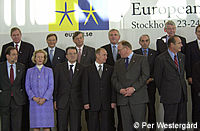
Europe must promote new technologies by strengthening the Community research and development policy and make particular efforts in new technologies, especially biotechnology concluded the European Council in Stockholm on 23 and 24 March. The Stockholm Council endorsed the Commission's proposals for the next research framework programme, and instructed the Commission to look at new possibilities, including increased mobility and economic incentives in order to make Europe the most competitive economy in the world. The Sixth Framework programme (FP6) should make full use of new instruments for promoting a network of excellence, integrated projects and the joint implementation of national programmes within a focused set of priorities, concluded the European Council. These recommendations are included in the European Commission's proposals for FP6, which the European Council invited the (Research) Council to adopt by June 2002, in codecision with the European parliament, The Council was invited by the European Council to examine a specific strategy for mobility within the ERA on the basis of the proposal announced by the Commission, to consider ways in which Member States' ideas for, and experience of boosting R&D through economic incentives could be shared and to adopt. The importance of launching the Galileo satellite navigation programme was recognised by the EU's national leaders, who urge the Council to define the arrangements necessary for launching the next phase of the project and establishing a single and efficient management structure before the end of 2001. The structure could consist of a joint undertaking, an agency or any other suitable body, stated the European Council. The leaders also noted that the Commission, together with the Council, will examine those measures required to utilise the full potential of biotechnology and strengthen the European biotechnology sector's competitiveness in order to match leading competitors, whilst ensuring that those developments occur in a manner which is health and safe for consumers and the environment, and consistent with common fundamental values and ethical principles. The value of the EIB's (European Investment Bank) Innovation 2000 Initiative was recognised by the European Council, who invited the EIB to further step up its support for R&D activities. The summit provided the opportunity to assess the EU's progress towards making Europe the most competitive and dynamic knowledge-based economy in the world, a target set at the Lisbon Council one year ago. 'Despite real progress since Lisbon in the take-up and use of the Internet by business, schools and citizens, Europeans are not yet fully using its potential in key areas such as public services e-government and e-commerce,' state the Presidency conclusions. Participants called for more efforts to increase the current level of digital literacy and create conditions in areas such as network security and data protection and privacy, in which people have confidence in using new services. The European Council stated that the telecoms package should be adopted as soon as possible this year in order to make the sector a level playing field. Work on digital literacy should begin at school, agreed Europe's Heads of State and Government. The priority includes education policies and lifelong learning as well as overcoming the present shortfall in the recruitment of scientific and technical staff, state the Presidency conclusions. The recommendation on mobility of students, persons undergoing training, teachers and trainers should be adopted by June 2001, agreed the European Council. The Commission was also instructed to assess before the end of the year, the feasibility of establishing a one-stop European mobility information site. The European Council expressed its concern at the lack of progress on the Community patent and urged the Council and Commission to speed up work in accordance with the Lisbon and Feira conclusions. President of the European Commission, Romano Prodi, highlighted that one of the 'six areas where Stockholm must make a difference' was in ensuring that agreement is reached this year on the community patent. 'We gave a commitment last year. Such words are useless if they are not followed up through action by your ministers in the Council,' he said.
Kraje
Sweden