


De Donnea seeks common position on FP6 proposals
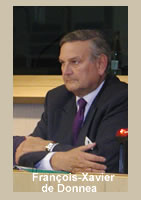
In the first of two Research councils under the Belgian Presidency, François-Xavier de Donnea, current chair of the council, will seek to reach an agreement on the structure and implementation of the Sixth Framework programme (FP6) in Luxembourg on 30 October. On the agenda will be the content of the specific programmes, the implementation of the new instruments 'networks of excellence' and 'integrated projects', the allocation of the budget and the budget and contents of the Euratom programme. Mr de Donnea may have difficulty in achieving agreement regarding Euratom as a number of Member States, such as France, regard nuclear fusion to be the energy of the future. They have indicated that they would like to see an increased budget in order to fund ITER, a project in which European researchers are working together with their counterparts in Japan and Russia to further develop nuclear fusion. The Presidency is, however, extremely reluctant to exceed the planned budget, which would involve reopening difficult budgetary debates. If necessary, Mr de Donnea is likely to push for appropriate budgetary transfers as an alternative. Another could be the first thematic priority proposed by the Commission, 'genomics and biotechnology for health'. Europe's research ministers must agree on whether funding should only be allocated to human health, or to research on animal health, plants and microbes as well. Mr de Donnea favours a compromise, whereby priority is awarded to human health, but funding is also made available for research into animal, plant and microbial research having a direct impact on human health. Regarding the proposed priority 'food safety and health risks', Mr de Donnea must seek to reach a compromise on which types of illness should receive European funding for research: diseases more common in Europe, such as cancer, cardiovascular disorders and Alzheimer's disease or diseases associated with poverty, such as AIDS, malaria and tuberculosis. Mr de Donnea would also like to see the inclusion of afflictions such as allergies and diabetes, which are becoming more common. In terms of sustainable development and global change, the Belgian Presidency intends to highlight the importance of secondary priorities such as public transport, roads and water transport and marine biology, none of which are mentioned in the Commission's proposals. In his quest to reach a common position on the above issues, Mr de Donnea has spent time touring the Member States and conducting bilateral meetings with the 14 other research ministers. He is also in close contact with MEPs involved in the industry, research, trade and energy committee. In order to preserve continuity between the Fifth Framework programme (FP5), due to end in December 2002 and FP6, due to commence in January 2003, the Belgian Presidency wants to reach a common position before handing over the Presidency of the EU at the end of the year. Mr de Donnea will have a second chance to reach such an agreement at the second Research council to take place under his chairmanship, to be held in Brussels on 10 December.
Kraje
Belgium