


Busquin welcomes Blair and Kok's call for increased business investment in R&D
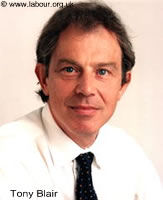
Research Commissioner Philippe Busquin has welcomed a call by UK Prime Minister Tony Blair and the Prime Minister of the Netherlands, Wim Kok, for increased business investment in research and development (R&D). The two leaders made their call in a letter to Spanish Prime Minister José Maria Aznar, who currently heads up the European Council under the Spanish Presidency of the EU. In a paper sent with the letter, Mr Blair and Mr Kok highlighted the disparity between the USA's success in exploiting new technology and scientific discovery and the 'European paradox' of EU failure to build on its strong science and knowledge base. 'It is not enough for Member States to rely on a strong, publicly-funded research base,' the paper argues. 'The stimulation of business investment in R&D and high levels of technology diffusion are needed to unlock the EU's innovation potential.' Commissioner Busquin welcomed the call, explaining that 'Europe cannot pretend that it wants to lead in the knowledge economy while producing far less knowledge than its competitors.' Mr Busquin sees the issue as a high priority for Europe, and has warned against the rising gap between Europe's R&D investment and that of Japan and the USA. In the paper, Mr Blair and Mr Kok call on the European Commission to deliver, in spring 2003, a number of concrete measures to boost innovation in Europe. The two heads of government would like to see an action plan to create 'an integrated European research and innovation area, focusing on key structural and institutional reforms.' The paper supports Commission moves to create a 'European area of knowledge' but adds that additional emphasis needs to be placed on the importance of innovation. 'The EU needs to focus above all on ensuring that knowledge is able to flow unimpeded throughout a coherent EU-wide innovation system. Those who use and exploit knowledge need to be brought together with those who finance it and those who generate it,' the document states. It calls for the EU to '[develop] a fully integrated European research and innovation area (ERIA), that builds on the present European research area and moves beyond the recent proposals of the Commission.' The paper also argues that reform is needed to ensure that European innovators can, like their US counterparts, 'use intellectual property rights as a means to raise finance.' It calls for moves to overcome the 'inflexibility' which has hindered progress on the creation of a European patent and agree on 'a solution which helps innovation and that businesses will use.' Mr Blair and Mr Kok also call on the Commission to provide recommendations and instances of best practice in the area of intellectual property rights. The UK and Dutch leaders say that the EU's multiannual research Framework programmes 'are best placed to act as facilitators and catalysts for knowledge flows and cooperation across the EU,' and call for a shift in focus from research projects to networking between industry and academia, the building of public-private partnerships and the transmission of knowledge. At the Lisbon European Council in March 2000, EU heads of State and government set the goal of making Europe the most dynamic knowledge-based economy in the world by 2010. The Commission has warned that the current R&D investment gap is jeopardising that goal. At an informal seminar of industry and research Ministers in Gerona, Spain, in February this year, it was agreed that measures should be taken to encourage private sector contribution in achieving the European target of channelling three per cent of GDP towards R&D by 2010.