


Liikanen outlines benefits of eEurope 2005
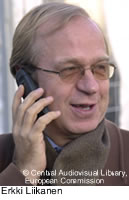
EU Commissioner for Enterprise and Information Society, Erkki Liikanen has welcomed the extension of the eEurope plan by the Barcelona summit as a key step towards the creation of a knowledge-based society in Europe. Speaking at the Mobile Europe 2002 conference in Bremen, Germany on 18 March, Mr Liikanen claimed that the extension of eEurope will allow it to focus on five key priorities. These are the need to promote attractive content, services and applications; provision of interactive public services online; achieving digital inclusiveness for all Europeans; promotion of broadband Internet access; and ensuring trust and confidence in cyberspace. The role of mobile communications in achieving these goals could be crucial, according to Mr Liikanen. He pointed out that the European Commission's communication on the introduction of 3G (third generation) mobile development had three main aims - support to wireless services, creation of a new regulatory environment and introduction of favourable conditions for 3G deployment in the short term. Some of these aims have already been dealt with. The need for a telecommunications regulatory environment in which 3G can operate has been approved and will come into force in 2003. The eContent and eGovernment programmes have been addressing the need for improved and more varied content, as well as the need to ensure that public services are as interactive as possible. Mr Liikanen emphasised that the role of mobiles in these programmes is important, as a higher number Europeans have a mobile phone than European households have Internet connections (75 per cent compared to 40 per cent). One of the major efforts that has been made by the European Union is through its IST (information society technologies) research programme, which has selected a number of programmes relating to mobile initiatives in the areas of health, tourism and advertising. 'Governments in the EU, the European Parliament and the European Commission have played their part so far, by supporting research and standardisation, facilitating roll-out through experimentation and by having created a sound legal framework. This must now continue in the spirit of eEurope 2005,' said the Commissioner. He explained that in real terms, the private and public sector must address developments in content, service and applications.