


Surface transport industries support research partnerships
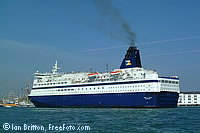
The benefits of research partnerships were highlighted by representatives from each surface transport industry at a conference in Valencia on 4 to 6 June. Reasons from strength in numbers when facing strong competition from outside the EU to the avoidance of duplication were offered by proponents of the automotive industry, the marine industry and those seeking to raise the profile of interoperability between marine and rail transport for participating in research partnerships. Paul Suinat from Chantiers de l'Atlantique emphasised that strong partnership between European players involved benefits Europe in the face of strong competition from outside the EU, such as Japan, South Korea and China. The European marine research industry had to structure itself so as to enable participation in the EU Framework programmes, said Mr Suinat. He claimed that closer collaboration began during the Fourth Framework programme, and led to the creation of various associations. 'We now have close to 85 technological projects and platforms in the Fifth Framework programme (FP5) and will go further in FP6,' he said. 'This has led to a competitive advantage for the EU maritime industries,' he added. Mr Suinat stressed that still more collaboration is however needed. This argument is supported by the fact that the industry is looking at submitting close to 200 expressions of interest to the European Commission, which indicate areas in which the research community are interested in working during FP6. Other industries are submitting roughly half that number of expressions of interest, said Mr Suinat. Carlo Camisetti from CETENA, as someone working towards promoting interoperability, is interested in seeing further cooperation between the maritime and the rail industries. He also claimed that cooperation allows researchers to 'take a wide view of a problem'. Dr Ulf Palmquist, programme manager for carbon dioxide R&D (research and development) from EUCAR, noted how trends in automotive research collaboration have changed. Whilst partnerships used to focus on basic R&D, they are now focusing increasingly on commercial products and services. Dr Palmquist highlighted how the type of collaboration envisaged by the Commission is integrated projects in FP6 (Sixth Framework programme). Such projects will involve layered and distributed responsibilities and a number of projects, each contributing to an overall aim, such as road safety. In an integrated project on road safety, individual projects could focus on preventative, active or passive safety, whilst contributing to the overall goal of reducing traffic accidents, said Dr Palmquist.