


Commission urges cooperation between scientists and journalists
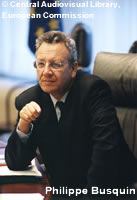
The European Commission's European Group on Life Sciences (EGLS) held a meeting to bridge the gap between scientists and the media in Brussels on 9 July 2002. Participants from 13 countries met with Commission representatives and Research Commissioner Philippe Busquin to examine ways of building closer links between scientists and the media and identify ways of improving coverage of science in the printed press, radio and TV. Commissioner Busquin said: 'This is the first time we have brought journalists and scientists together at European level to discuss how we can all better communicate on science. This is a priority and a need in the knowledge-based society.' He added that European citizens need to be kept up to date with scientific progress, particularly in the life sciences, to foster debate on new products. Scientists outlined the increasing need for them to communicate with the public and highlighted the tendency for scientific developments to make the headlines only if associated with a breakthrough or a controversy. They pinpointed particular hostility surrounding recombinant DNA technology, such as GM foods. Recommendations which emerged from the meeting include the launch of studies on science communication in Europe and the introduction of temporary science 'internships' to enable journalists to learn first-hand about life in the lab. Other ideas thrown up during the day include engaging researchers to produce feature articles for the broader public, awards for good communicators in life sciences and encouraging research institutions to play a more proactive role in the communication process. The EGLS is a think-tank of experts appointed by Mr Busquin in 2000 to provide advice on policy matters related to life sciences, particularly communication and awareness raising. The European Commission also launched a new initiative to boost the flow of communication between scientists, the media and the public on 4 July. The Science Generation scheme will bring scientists, teachers, students and journalists together to foster debate on biosciences.