


Conference focuses on promoting candidate country participation in funding programmes
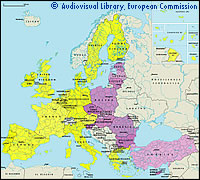
The first EFFE conference (European funding facilities for enterprises from the candidate countries) has been hailed a success, but participants agreed that the process of integration must be regarded as ongoing. The two day event was held in Brussels from 14 to 15 October, and welcomed over 200 representatives of enterprise, government and financial institutions from EU and candidate countries. The key aim of the event was to promote an exchange of information with regards to opportunities that exist under European financing facilities, with a particular focus on SMEs (small and medium sized enterprises). Peter Wragg, Head of Unit for candidate country relations at the Commission's DG Enterprise, and chairman of the support mechanisms and services panel at the event, said: 'This conference represents a small but significant step in the development of cooperation with candidate countries. Having spent a lot of time and resources introducing the required legislation into their legal frameworks, positive measures such as these are beginning to take shape.' Community programmes and funds present real opportunities to strengthen businesses in candidate countries. For example, businesses and research institutions from applicant countries will, for the first time, be able to apply for funding on an equal footing with current EU Member States under the 17.5 billion euro Sixth Framework Programme. Due to complicated application procedures and poor levels of information, however, there is concern that candidate country enterprises, and particularly SMEs, will not be equipped to fully exploit such opportunities. As well as giving overviews on more than 90 EU funded programmes, and providing delegates with a large range of information resources, the EFFE conference suggested a number of measures to ensure that accession countries are not left behind in the funding process. Examples included the need for EU institutions to become more proactive in providing information on programmes to businesses in candidate countries, the simplification of legislation on access to funding, training and expert advice on how to create a successful programme applications, and more investment for enterprise in accession countries by European financial institutions. Participants and organisers were positive in their comments at the close of the conference, and expressed optimism regarding the inclusion of accession country enterprises in the future. This was the first time that these stakeholders from across Europe had gathered at the same time and with a common aim, and there was a feeling that this was the start of a new process of communication for enterprise in Europe.