


Research ministers agree to 'listen more' to one another
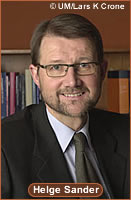
Members of the EU Competitiveness Council agreed on 26 November to 'listen more' to each other when implementing national research policies, to cooperate with the Commission in implementing a biotechnology 'roadmap', and to establish a pilot programme using Article 169 to bring together national research programmes on AIDS, malaria and tuberculosis research. Listening more to one another will reduce fragmentation and aid the establishment of a European Research Area (ERA), decided Europe's research ministers. Danish Minister for Science, Helge Sander, also proposed more concrete mechanisms which could provide more systematic coordination of Europe's research and innovation efforts. 'We now have a commitment on the side of the Member States to go further with this,' said Mr Sander. 'The job is now to get more concrete mechanisms in place, so that we know who is doing what. This will happen in the near future.' 'We must do our utmost to assure the free movement of researchers across the borders - today they must spend time and energy on red tape which has nothing to do with science. That, I believe, is going to have a considerable effect, not just on what we get out of our investments, but certainly also on the quality of the research,' Mr Sander added. Discussing the Commission's communication 'Life sciences and biotechnology - a strategy for Europe', the Council underlined the necessity of approaches that take into account biosafety issues related to new technologies and societal needs. Benefits and risks should also be continuously assessed, agreed ministers. The Council invited the Commission to coordinate the implementation of a roadmap, which would include monitoring the competitiveness of the EU's biotechnology sector, in particular the framework conditions, entrepreneurship and functioning markets, research and innovation, public-private cooperation and societal dialogue. The Commission is also charged with monitoring and driving the implementation of the roadmap and for stimulating cross-sector coordination within fields of relevance to biotechnology. The Commission will provide a yearly report on the implementation of the roadmap. Ministers acknowledged that any approach to biotechnology should engage all Member States and encompass all policy areas and instruments available for the sector's promotion, without neglecting a continuing societal dialogue, a regulatory framework which is science-based, and respect for diversity of views and freedom of choice. The European research and innovation area will be particularly helpful in providing a structuring effect and in overcoming the fragmentation of resources and lack of critical mass, stated the ministers. In order to strengthen Europe's biotechnology sector, Member States are to assess future requirements in specific skills for scientists, technicians, engineers and managers within the various life science fields. The Council called upon industry and academia to assist in developing tools and to contribute within their own areas of competence, for example staff exchanges and research academy partnerships. Public authorities are to adopt a proactive role, and ethical bodies within the EU should increase their dialogue. The Council noted that biotechnology could contribute to progress and economic growth in developing countries, but emphasised that biotechnology applications must correspond to the desires of the countries concerned. The Council confirmed its intention to pursue the proposal for a pilot programme using Article 169. The proposal would allow the Community to participate in research and development programmes undertaken by groups of Member States. Ministers underlined the importance of ensuring the commitment of financial and human resources at the national level, including, as appropriate, those of third countries, to carrying out these activities. They also stressed the importance of associating the developing countries very closely with all aspects of the programme, including the decision making process. Other issues discussed at the Council meeting included the Commission communication 'Better environment for enterprises', a communication on increasing research spending to three per cent of GDP and the Community patent.
Kraje
Denmark