


Boosting entrepreneurship is the key to economic growth, says Liikanen
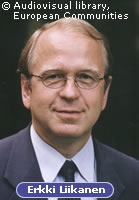
Erkki Liikanen, Commissioner for Enterprise and the Information Society, highlighted the need to unlock entrepreneurship potential in Europe as he presented the Green Paper on Entrepreneurship and initiatives for SMEs (small and medium sized enterprises) to key stakeholders during a seminar on 22 January in Brussels. While the Green Paper targets future policy improvements and aims to encourage and prepare more people in Europe to become entrepreneurs, the package of documents relating to SMEs (the SME Package) provide a snapshot of recent progress in small business policy across Europe. It analyses how the Member States, the candidate countries and the Commission are implementing the principles embodied in the EU Charter for Small Enterprises. It also presents in detail the SME dimension of EU policies and points to further policy action. 'Entrepreneurship has an important economic role as a driver for competitiveness, job creation and economic growth,' said Mr Liikanen. The Commissioner spoke of three pillars for action in the Green Paper: the need to break down barriers to business development and growth, to balance the risks and rewards of entrepreneurship and, above all, to change society's opinion of entrepreneurship. 'Entrepreneurship is first and foremost a mindset,' claimed Mr Liikanen. However, according to Mr Liikanen, in order 'to make the right policy, you have to make the right analysis.' With this in mind, the floor was opened to the participating stakeholders. In particular, two academics, Professor Roy Thurik , Professor of industrial and small business economics at Erasmus University in Rotterdam and Professor Juan Roure, Professor of entrepreneurship at IESE business school in Spain, presented their remarks and proposals on the Green Paper. According to Professor Thurik entrepreneurship is 'Europe's secret weapon' in that 'smallness leads to diversity [...]. Small business owners can experiment to see what is technically viable. They can innovate and compete [...]. The overall feeling is that smallness leads to economic growth.' While Professor Thurik applauded the Green Paper for stimulating a debate, he remarked that it lacked 'quantitative targets' which he felt would help reassure people. Professor Roure focused on how existing small and medium enterprises can grow. As the green paper highlights, only 30 per cent of Europe's SMEs express an ambition for growth. This, according to Professor Roure is not enough. He outlined several proposals to encourage growth: - Establish an entrepreneurship council of European authorities and key stakeholders to lead the change process. - Establish a major communication event, 'entrepreneurship day', as well as a continuous plan to promote entrepreneurship at all levels (i.e. educational, local, regional and European). - Create a European model for growth management by developing self-assessment tools, an award system and a scoreboard to give recognition to progress. - Develop and promote training programmes for teachers, minority groups, and potential business angels. - Develop programmes to support the establishment of a board of directors and the application of good practices. -Accelerate the reform of tax and legal frameworks towards a more conducive environment for risk and growth. Also present at the seminar was Mr Hans-Werner Müller, Secretary General of the European association of craft, small and medium-sized enterprises (UEAPME). He spoke of the need to accelerate future policy improvements. 'If we are to maintain the European social model, we need results.' According to Mr Müller, in order to fulfil the Lisbon strategy of Europe becoming the most dynamic knowledge-based economy by 2010, the red tape and taboos surrounding entrepreneurship must be lifted. The seminar also heard from Peter Jungen, President of European business Angel Network (EBAN), who welcomed the coordinated initiative of DG Enterprise; seeing the Green Paper and SME package as 'an important milestone for better understanding European entrepreneurship.' Mr Jungen also emphasised the need for business angel investment in entrepreneurship in order to help put an end to the European 'entrepreneurship deficit.' It is hoped that the outcome of the seminar will generate invaluable input on the Green Paper and SME package from all key stakeholders. To facilitate a coherent and comprehensive response, a list of ten questions for entrepreneurship has been drawn up. Feedback on the Green Paper and SME package is expected by the end of June 2003. The Commission's Enterprise DG and the Greek Presidency are also jointly organising a conference on Europe's entrepreneurial future in Thessaloniki on 13 February, which will provide stakeholders with another opportunity to follow up on the Green Paper.