


EU project to assess threats and opportunities in Europe's mountain regions
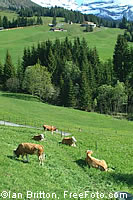
The European Commission is funding an initiative that will assess the threats and opportunities to wildlife conservation posed by the decline in agriculture in Europe's mountainous regions. The BioScene project brings together researchers from the Czech Republic, Portugal, Norway, the UK, Greece, France and Switzerland, and will receive 2.3 million euro of EU funding over three years under the energy, environment and sustainable development programme of the Fifth Framework Programme. The initiative will seek ways of reconciling conservation of biodiversity with changing human activities. 'Traditional farming practices [...] are fast becoming uneconomic, and young people from mountain farming families are leaving for more prosperous city employment,' explains Dr Jonathan Mitchley of the Department of Agricultural Sciences at Imperial College London, the project coordinators. 'This could mean dramatic landscape changes and loss of mountain wildlife and their habitats. But there could also be exciting opportunities for re-establishment of endangered or locally extinct species and new land uses such as rural tourism and recreation,' he continued. The project will take the form of case studies, which will focus on the Cairngorms in the UK, the Jotenheimen range in Norway, Grande Causse, France, Mid Grisons, Switzerland, Bukovskevrchy, Slovakia, and the Pindos mountains in Greece. Interdisciplinary teams of researchers from each country will perform ecological modelling, rural policy analysis and sustainability appraisal. This interdisciplinary approach is designed to provide regional, national and European policy makers with realistic and sustainable recommendations for safeguarding the future of mountainous areas. The ecological element of the research will include analysis of data on the changes in species, habitats and landscape over the last 50 years and present scenarios for future agricultural change. The consequences of these scenarios for wildlife species and habitats will be then be modelled. These models, or BioScenes, will be presented to regional stakeholders for discussion and analysis. At this early stage, possible BioScenes envisaged by the team include, for example, the reintroduction of brown bear, lynx, and wolverine in areas of Greece and Norway no longer needed for agricultural production, and the reestablishment of mountain scrub and woodland, and their associated wildlife, in the Cairngorms in Scotland. Dr Mitchley states: 'It's very exciting to have this opportunity to undertake interdisciplinary research with the very real potential for making a difference to the future of both wildlife and human communities in these important mountain areas of Europe.'