


EU must continue scientific cooperation with Black Sea region through FP6, says ICBSS
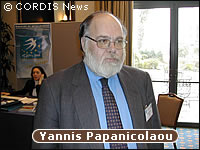
The EU must develop further relations with the Black Sea region through the Sixth Framework Programme (FP6), said Mr. Yannis Papanicolaou, Director General of the international centre for Black Sea studies (ICBSS) on 19 February. Speaking at a conference aimed at promoting FP6 to countries of the Balkan and Black Sea regions in Thessaloniki, Mr. Papanicolaou presented the work of the ICBSS, emphasising its crucial role in harmonising the scientific potential of the countries of the Black Sea region in order to establish partnership with Europe and beyond. 'ICBSS considers as a key task its contribution to the improvement and better utilisation of the BSEC [Black sea economic cooperation] research potential and the socio-economic knowledge base of the Black Sea region by promoting collaboration with leading research centres of the EU countries. Its realisation would permit to push the overall European R&D [research and development] potential forward by putting BSEC technological resources in good use for the benefit of both the BSEC and EU countries,' claimed Mr Papanicolaou. The BSEC was created by the governments of eleven States: Albania, Armenia, Azerbaijan, Bulgaria, Georgia, Greece, Moldova, Romania, Russia, Turkey and Ukraine, in1992. These countries were experiencing the same level of economic development and therefore decided to work together in order to meet the challenge of economic transition and integration in the European economic and security structures. Mr Papanicolaou noted the considerable work that has already been carried out by the ICBSS in establishing significant partnerships and cooperation with leading European research centres and think tanks like the Centre for European Policy Studies (CEPS) in Brussels. However, according to Mr Papanicolaou, the forthcoming enlargement of Europe could lead to the marginalisation of the Black Sea countries. It is for this reason that the EU must develop a BSEC dimension in their research project, argued Mr Papanicolaou. Another problem facing the region is that while there are very prominent scientists with very interesting ideas, they do not have the necessary resources to develop their ideas to the commercialisation stage and the know-how to market them to possible end users, said Mr Papanicolaou. In the Director General's opinion, FP6 is a unique opportunity to address the financial and innovation transfer problems, and to resolve the brain drain crisis while avoiding the marginalisation of scientists in the region. 'We are dreaming of a Europe that stretches [...] to the Urals [...]. What is needed is political will.' A sign of that political commitment came in a statement issued by Dimitris Deniozos, the Greek general secretary for research and development. 'Safeguarding peace and prosperity in the region of the Balkans and the Black Sea is a crucial target towards which research cooperation is an important step.' Greece [...] feels the need and has the responsibility to play an active role towards the incorporation of the research potential of these countries into the ERA [European Research Area] and for the promotion of European integration within the region,' continued Mr Deniozos. The conference closed with reassurance from the Greek Presidency and the European Commission of further promotion of international cooperation within European research policy.
Kraje
Greece