


Success of Europe's biotech industry depends on cooperation, says Liikanen
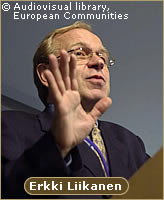
Commissioner for Enterprise and the Information Society Erkki Liikanen has admitted that the Commission is 'anxious' about the state of the European biotechnology industry, and has called for further cooperation between policy makers and the private sector to solve the problem. In a speech to the Biovision world life sciences forum in Lyon on 10 April, the Commissioner outlined the potential impact of biotechnology in the EU's pursuit of sustainability, arguing that it could directly contribute to each pillar of sustainable development: economic, social and environmental. However, Mr Liikanen warned that the Commission is '[...] anxious that in the area of life sciences and biotechnology we might run the risk in the EU of not [sufficiently] raising our competitiveness and dynamism.' In an attempt to meet this challenge, Mr Liikanen identified several key issues which he said require 'decisive actions'. Important progress has already been made in two of the areas, the fragmentation of research and the need for increased protection for intellectual property rights, with the adoption of the Sixth Framework Programme and the political agreement on a Community Patent respectively, he said. But the Commissioner called for further action on intellectual property rights in order to encourage research and investment in the field. He reminded delegates that so far only six Member States - Denmark, Finland, the UK, Ireland, Spain and Greece - have transposed the directive on the legal protection of biotechnological inventions into national law. '[T]he failure of the others to do so leaves companies engaged in innovative biotechnology research uncertain about whether they are fully entitled to the commercial fruits of their work,' warned Mr Liikanen. He similarly called on EU countries to quickly implement new legislation governing the authorised release of genetically modified organisms (GMOs) into the environment. Another issue highlighted by Mr Liikanen was the lack of financial capital within the industry, which raises the risk of losing elements of Europe's knowledge base overseas. The Commissioner said that a concerted effort involving both public authorities and private investors is needed to bridge the financing gap. Finally, the Commissioner called on the private sector to play its part in improving the health of the biotechnology industry. Key tasks for business, said Mr Liikanen, include demonstrating positive examples to the public of the contribution of biotechnology to sustainable development, and providing assessments to national and European governments on biotech policies and their future needs in terms of education and training. Mr Liikanen promised that the Commission is determined to 'keep up the general momentum and play a facilitating role' in the pursuit of its biotech strategy, but stressed that its success now depends on the cooperative effort of policy makers and the private sector at all levels.
Kraje
Austria, Belgium, Germany, Denmark, Greece, Spain, Finland, France, Ireland, Italy, Luxembourg, Netherlands, Portugal, Sweden, United Kingdom