


EIB and World Bank stress need for more academia-industry links in Poland
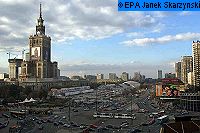
A report on tertiary education in Poland by the European Investment Bank (EIB) and the World Bank claims that links between academic research and industry are weak, and that academics are not fully aware of their potential as a source of innovation and commercially viable technological advances. The report also notes an absence of linkages between higher education institutes and industry in the form of contract or joint research, personnel exchanges, cross-patenting, licensing of technology and the purchase or sharing of equipment. 'This may be attributed to the legacy from communist times when basic, rather than applied science, was highly regarded and rewarded, as a kind of ideology-free haven but also to the fact that there is little demand (pull) from industry and enterprises in Poland which makes the promotion of more applied projects more difficult,' states the report. While the dominance of basic research in Poland has led to the amassing of national expertise in a number of fields, it has affected the way in which project proposals are evaluated, according to the EIB and the World Bank. Poland evaluates both institutes and project applications using traditional academic research output indicators, primarily publications in refereed academic journals, and gives little weight to industrial or social-related activities. The same criteria set the career path for the Polish researcher, who is focused much more on publications in internationally peer-reviewed journals than on patents or industrial innovations. The solution, according to the report, is to identify feasible incentives for higher education institutes to transform. The incentives would stress linkages between teaching, research and wealth creation, and would encourage higher education to take intellectual property as seriously as the publication side of academic output. Another option is to strengthen or create research and commercialisation units. Efforts have been made to build up technology incubators, technology transfer centres and science parks within Poland, but these endeavours have met with little success. They have, however, led to a broader understanding of the time, effort and additional tools needed in order to be successful, according to the report. Those involved have also visited centres outside Poland in order to see examples of good practice. The lack of medium and long term public funding within Poland makes it difficult for the technology transfer community to replicate these efforts at home, however. The World Bank and the EIB suggest that the relevant ministries encourage higher education institutes to pursue a policy of 'picking winners' while encouraging links with business through the inclusion of internships in curricula. Poland's research community should, however, be buoyed by the 250 million euro that is coming its way in the form of an EIB loan. 'The science and innovation framework loan will support projects that are included in Poland's current and future research and innovation investment programmes,' said the EIB on 15 October. 'The EIB loan will fund budgetary allocations of the state and thus contribute to the realisation of selected science and innovation investment projects,' it added.
Kraje
Poland